
Drive — The Secret to Unlocking Your Bull Terrier’s Full Training Potential
Every Bull Terrier owner eventually runs into this moment…
You pull out the treats, step onto the training field, and your Bull Terrier looks at you with that unmistakable expression:
“Meh. Not today.”
You repeat the command.
They sniff the ground.
A bird flies by — and poof! your training session is over.
This isn’t stubbornness.
This is a dog with no drive engaged.
Drive is the engine that powers training. It’s the spark that turns your Bull Terrier from distracted clown to laser-focused partner. When you understand how to build and use it, training stops feeling like a battle — and starts feeling like a game you both love to play.

What “Drive” Really Means
In dog training, “drive” is your dog’s natural motivation to work. It’s the enthusiasm, the energy, the I want to do this attitude that makes learning not only easier but enjoyable.
For Bull Terriers, drive often shows up as:
- Explosive energy when they see their favourite toy
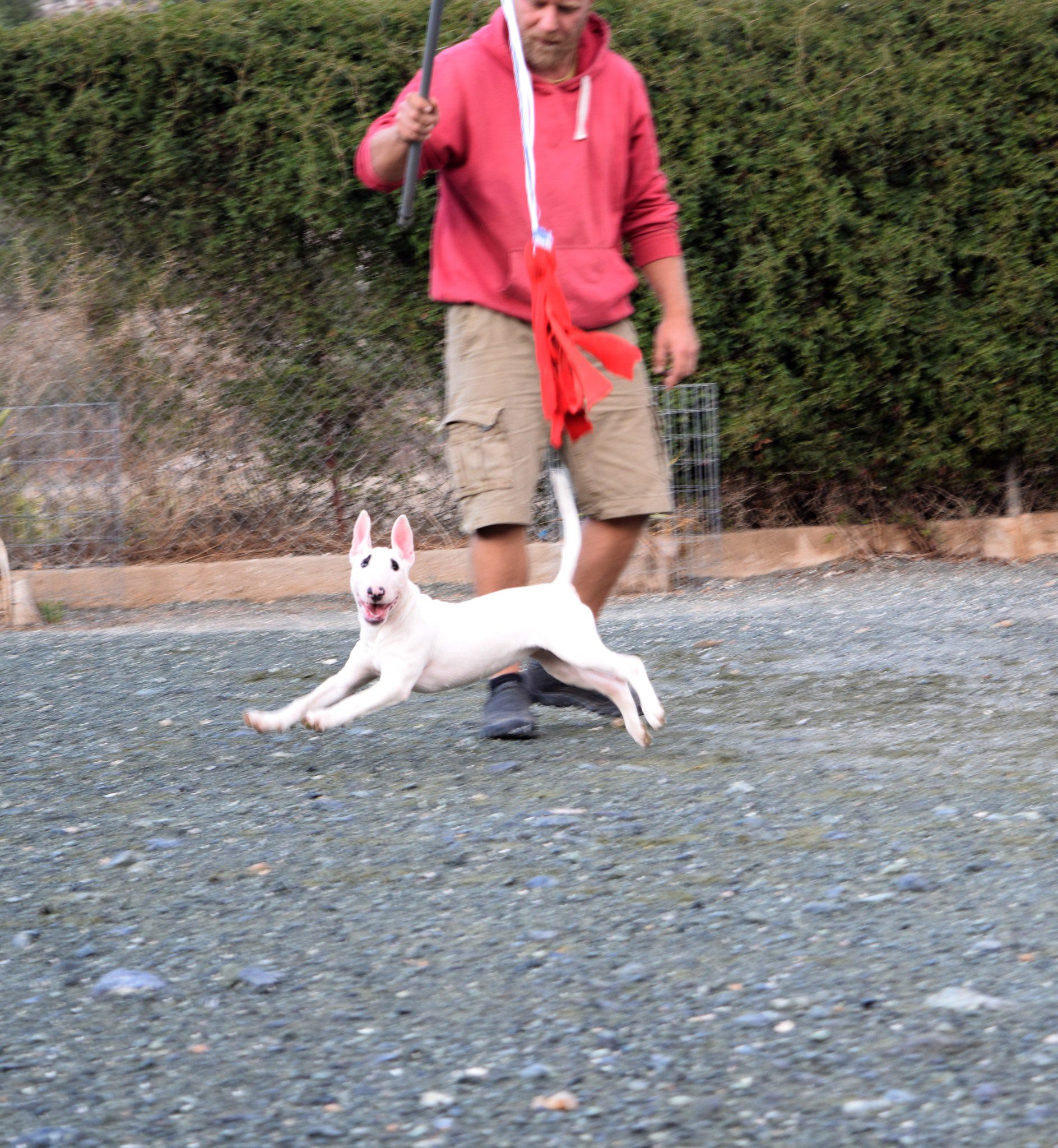
- Locking onto movement or a game of tug with full intensity
- An eagerness to chase, fetch, pull, or solve a challenge
When drive is present, your Bull Terrier doesn’t just respond they engage. And engagement is where training magic happens.
“A Bull Terrier without drive is like a sports car without fuel. It looks powerful but it’s not going anywhere.”
Why Drive Matters So Much for Bull Terriers
Bull Terriers are intelligent, playful, and famously independent. That independence often gets mislabelled as stubbornness.
In reality, they just don’t work for free.
Drive gives them a reason to participate.
It turns commands into opportunities.
When drive is active:
- Your dog learns faster and remembers better.
- Distractions become less powerful.
- Training sessions stay fun and upbeat.
- The bond between you and your dog deepens naturally.
This is why professional trainers don’t just teach obedience they build motivation first.
Step 1: Discover What Lights Your Dog Up
Not every Bull Terrier is motivated by the same thing. Your first job is to figure out what your dog will work for.
Common Bull Terrier drive triggers:
- High-value treats (soft, smelly, irresistible)
- Tug toys or ropes
- Balls with movement
- Play chase or flirt poles
- Social praise or touch (for very human-focused dogs)
Pro tip: Keep a “reward ranking” list. Find the #1 reward that makes your dog’s eyes light up — that’s your rocket fuel.
Step 2: Build Anticipation, Don’t Just Hand It Over
The biggest mistake owners make is giving the reward too easily. Drive grows through anticipation.
Here’s how to build it:
- Show the toy or treat but don’t give it yet.
- Let your dog get excited ears forward, body engaged.
- Ask for a simple behavior (like “sit” or “look”).
- Boom — reward!
That moment of controlled excitement is what strengthens the dog’s motivation over time.
“If everything is free, it’s boring. If everything is earned, it’s powerful.”
Step 3: Keep Training Sessions Short, Sharp, and Fun
Bull Terriers lose interest fast if you drag sessions out. The best way to keep their drive high is to end while they’re still excited not when they’re tired or bored.
- 3–5 minutes is plenty in the beginning.
- Alternate obedience with play.
- Leave them wanting more.
A short, fiery session beats a long, frustrating one every single time.
Step 4: Rotate Rewards to Keep the Spark Alive
Bull Terriers are smart. If you use the same treat or toy every time, they’ll eventually get bored of it.
Keep their drive fresh by rotating rewards:
- Day 1: Tug toy
- Day 2: High-value food
- Day 3: Ball chase
- Day 4: Short play wrestle or praise
This unpredictability makes training exciting again. Your dog starts to think, “What are we playing for today?” — and that’s exactly the mindset you want.
Step 5: Channel Drive Into Structure
Drive without direction can become chaos zoomies, pulling, barking, biting toys instead of releasing.
Your job as the handler is to shape that energy into controlled power.
Examples:
- Teach your dog to “Out” the tug toy on cue.
- Reward eye contact before releasing the toy.
- Use drive games as rewards for obedience, not replacements for it.
- End sessions on your terms — never when they get distracted.
This turns drive into a training tool, not a wild storm.
Drive Isn’t Optional — It’s Your Superpower
For Bull Terriers, drive is everything. It’s how you get:
- Reliable obedience without begging
- A dog who wants to train
- Focus in high-distraction environments
- A bond that’s built on shared joy — not constant correction
When you stop trying to suppress your dog’s energy and start channelling it, you unlock their true potential.
“Don’t fight their fire. Feed it, shape it, and make it work for you.”
Final Thoughts — Fuel Before Form
A Bull Terrier without drive is like trying to train with the brakes on.
A Bull Terrier with drive is unstoppable.
If you want better obedience, better focus, and a more joyful partnership, don’t start with commands — start with motivation.

Drive is one of the four pillars of our B.E.D.F. Method (Bond – Engagement – Drive – Focus). If you want to master the full system and build a Bull Terrier who loves to work with you, you’ll find step-by-step methods and video tutorials inside our training eBook “How To Train Your Bull Terrier — Step by Step.”
Build the drive. Shape the focus. Enjoy the journey.


Leave a Reply