
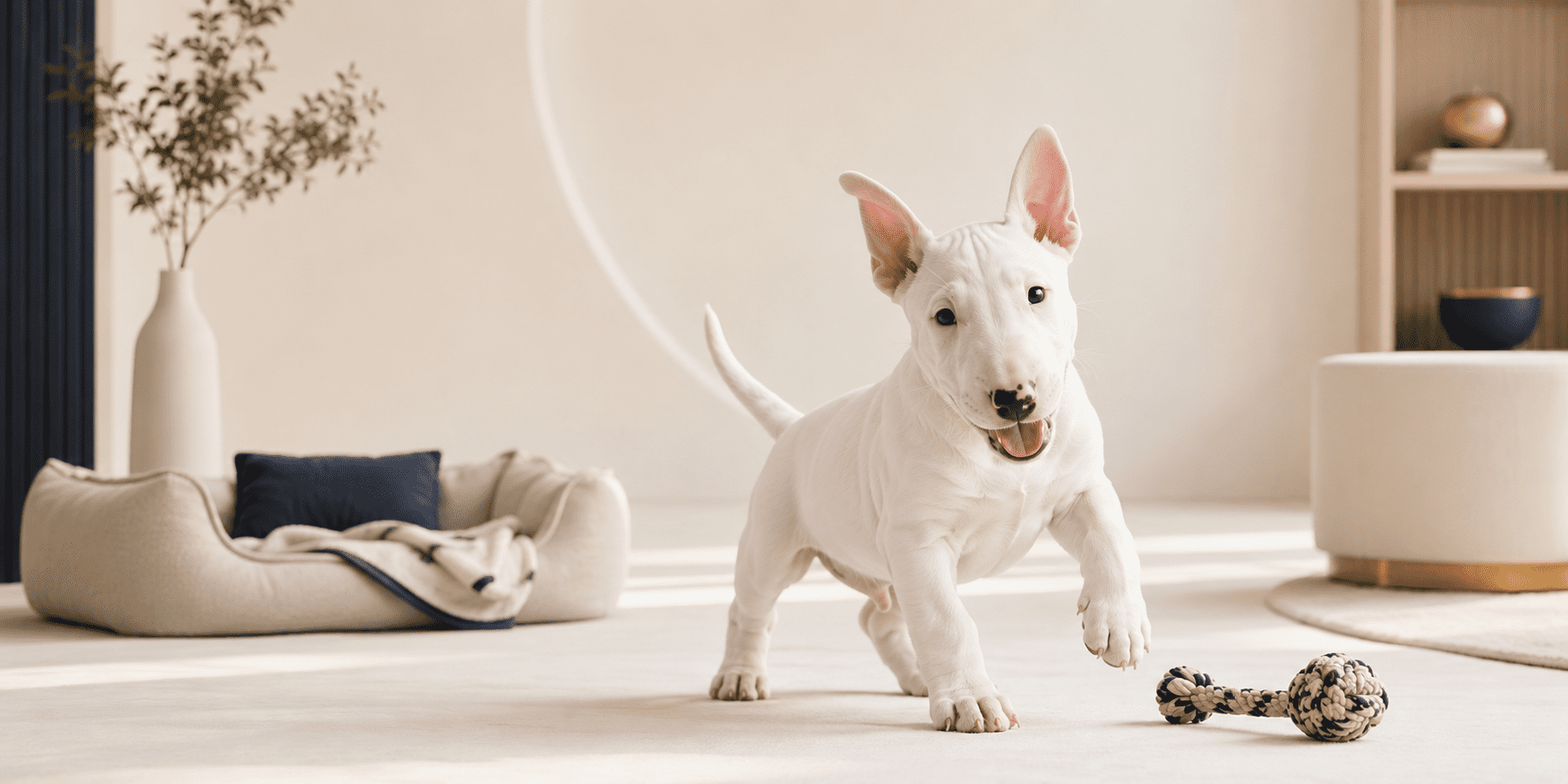
Bull Terrier Puppy Structure
Bull Terrier puppy structure is what turns chaos into confidence.
A Bull Terrier puppy does not become easier to live with because the owner gives unlimited freedom and hopes the puppy will understand the rules later. Puppies learn through repetition, routine, boundaries, recovery, and clear daily patterns.
Structure is not about being harsh. It is about making life understandable. When a puppy knows where to rest, when to toilet, what to chew, when to play, where freedom happens, and how the owner responds, the home becomes calmer and training becomes easier.
Quick Answer
What does Bull Terrier puppy structure mean?
Bull Terrier puppy structure means giving your puppy a clear daily rhythm for toilet breaks, feeding, rest, play, chewing, training, supervision, and controlled freedom.
It does not mean making the puppy robotic or removing personality. It means preventing the puppy from rehearsing chaos all day and helping the puppy learn which behaviours work inside the home.
The strongest puppy structure usually includes a safe rest area, predictable toilet routine, controlled access to rooms, appropriate chewing outlets, short training moments, calm handling, and freedom that grows slowly with maturity.

Structure Prevents Rehearsal
The puppy should not practice the behaviour you want to remove.
A puppy that spends the day chewing the bed, grabbing feet, stealing objects, toileting in hidden corners, and refusing to settle is not learning freedom. It is learning patterns.
Structure changes the pattern before it becomes normal. You are not only stopping problems. You are teaching the puppy what daily life should feel like.
Why Structure Matters
Bull Terrier puppies need freedom in stages.
Bull Terrier puppies are physical, curious, clever, emotional, and often persistent. If they are given too much access before they understand the rhythm of the home, they can quickly create habits the owner later calls problems.
Good structure does not suppress the puppy. It protects the puppy from repeating the wrong choices before the puppy has enough maturity, training, and impulse control to handle more freedom.
Toilet success
Controlled access makes it easier to see when the puppy needs to go out and prevent hidden mistakes.
Less biting
Structure limits overexcitement, tiredness, rough play, and constant access to hands, feet, clothes, and movement.
Better rest
Many puppy behaviour problems become worse when the puppy is overtired and has no protected recovery time.
Clearer learning
A predictable routine helps the puppy understand what is expected and what choices are rewarded.
The Puppy Structure Plan
How to build structure without making life complicated.
The goal is not to create a perfect schedule that controls every second. The goal is to create a repeatable daily rhythm that makes good behaviour easier and chaotic behaviour harder to practice.
Create the puppy’s safe zone
Your puppy needs a clear place where rest, chewing, settling, and calm reset can happen.
- Keep the area safe and boring enough for rest.
- Use it before the puppy becomes completely wild.
- Do not use it only as punishment.
- Make it part of normal daily rhythm.
Build toilet rhythm around predictable moments
Toilet training improves when the owner stops guessing and starts using predictable timing.
- Take the puppy out after sleep, food, play, excitement, sniffing, and short intervals.
- Reward success calmly and clearly.
- Prevent hidden accidents with supervision.
- Do not give full house access too early.
Separate play from chaos
A Bull Terrier puppy needs play, but play should not become endless biting, jumping, chasing, and crashing.
- Use toys instead of hands.
- End play before the puppy loses control.
- Mix movement with calm pauses.
- Follow exciting play with toilet and rest.
Protect rest before behaviour breaks
Many owners wait until the puppy is already frantic before they think about rest.
- Watch for biting, zooming, barking, and inability to redirect.
- Use calm rest windows during the day.
- Reduce stimulation when tiredness appears.
- Remember that sleep is behaviour prevention.
Grow freedom slowly
Freedom should expand when the puppy is succeeding.
- Start with small supervised areas.
- Add rooms gradually.
- Use gates, pens, and leashes when needed.
- Make freedom a reward for better behaviour.
Reward calm choices every day
Do not only react to chaos. Notice and reward the puppy when it settles, follows, checks in, chews correctly, and handles small frustration calmly.
- Reward looking at you.
- Praise quiet chewing.
- Reinforce settling on the bed or mat.
- Build calm habits before problems become stronger.
Structure Is Not Control For Control’s Sake
Structure creates freedom later.
Many owners feel guilty limiting a puppy. But unlimited freedom before maturity does not create a happier dog. It often creates a puppy that practices biting, chewing, stealing, toileting mistakes, ignoring, and overexcitement.
Good structure is temporary support. As the puppy becomes more reliable, calm, clean, responsive, and able to settle, freedom can grow safely.
Common Structure Mistakes
Where owners accidentally create puppy chaos.
Most puppy chaos is not created in one dramatic moment. It is created through small daily repetitions: too much freedom, too little rest, unclear rules, late redirection, rough play, and emotional owner reactions.
Giving full house access
The puppy should not have the whole house before it understands toilet rhythm, chewing rules, and supervision.
Using the crate too late
If the puppy only goes to the crate after total chaos, the owner misses the chance to prevent overarousal earlier.
Rewarding demand behaviour
If barking, biting, jumping, or pushing always gets attention, the puppy learns to use pressure to control the owner.
No clear rest pattern
A tired puppy may look energetic, but the behaviour often becomes more mouthy, frantic, and difficult to redirect.
Changing rules by mood
If the rules change depending on who is home or how tired the owner feels, the puppy receives a confusing message.
Too much excitement indoors
The house should not become a constant wrestling arena. Indoor life must include calmness, rest, and controlled interaction.
A Simple Daily Rhythm
What a structured puppy day can include.
This is not a strict schedule. It is a pattern. The exact timing depends on the puppy’s age, household, feeding routine, sleep needs, and toilet progress.
Wake and toilet
The day starts with toilet before play, freedom, or distraction.
Food and toilet
Food is followed by calm supervision and another toilet opportunity.
Short play and training
Use short sessions for name response, following, toy redirection, and gentle handling.
Protected rest
Rest periods prevent the puppy from becoming overtired, mouthy, and chaotic.
When Structure Is Not Enough
Some puppy problems need a closer look.
Most puppy chaos improves when structure improves. But if the puppy is showing intense guarding, serious biting, unsafe reactions, extreme fear, or behaviour that feels unusual for normal puppy development, do not keep guessing.
In that case, complete the Bull Terrier Quick Diagnostic so the situation can be understood with more context before choosing the next training direction.
Continue The Puppy Route
Structure connects the whole puppy foundation.
Puppy structure is not separate from biting, toilet training, rest, engagement, and early manners. It is the frame that makes all of those things easier.
Main Hub
Bull Terrier Puppy Training
Start here for the full puppy foundation route: early manners, biting, routine, focus, socialization, rest, and structure.
Biting Help
Bull Terrier Puppy Biting
If puppy biting is the main problem, use the biting page to understand redirection, rest, chewing outlets, and overarousal.
Owner Fit
Bull Terrier Owner Quiz
If you are not sure whether your situation needs puppy foundations, structure, breed understanding, or personal guidance, take the quiz.
Structure Creates Freedom
A structured puppy becomes easier to guide.
A Bull Terrier puppy does not need a chaotic childhood to become confident. It needs clear rhythm, safe freedom, fair rules, enough rest, appropriate outlets, and an owner who understands that structure is not the enemy of personality.
If the puppy knows where to rest, where to toilet, what to chew, how play begins and ends, and how calm choices are rewarded, the puppy has a better chance to become stable, responsive, and enjoyable to live with.
Start with structure. Build trust. Grow freedom slowly.
Unique mindset. Unmatched loyalty. Not just a breed, a lifestyle.