Category: Bull Terrier Behavior
-
Funny Until It Isn’t: 10 Bull Terrier Habits That Quietly Become Training Problems
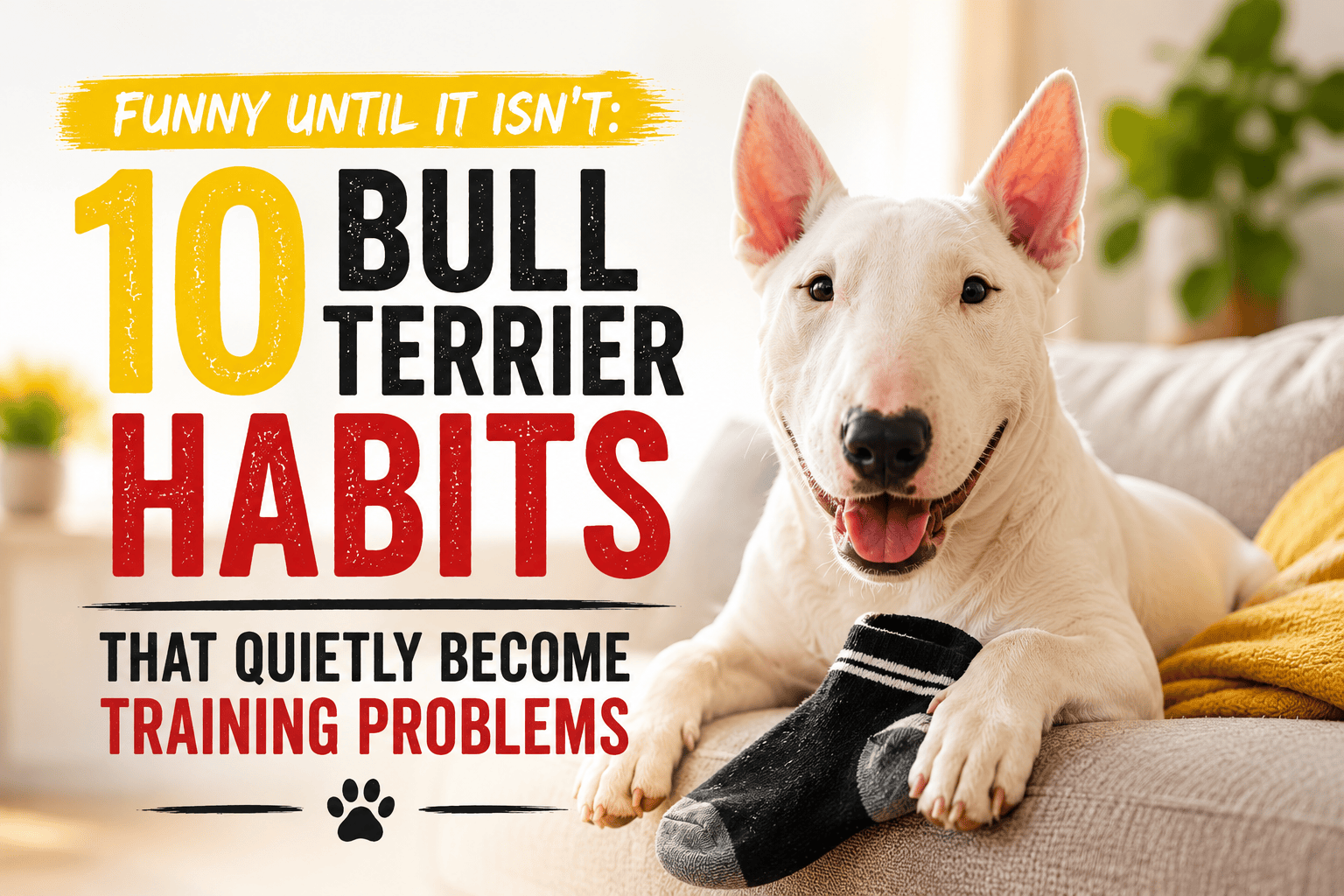
Many Bull Terrier habits begin as funny, harmless moments. Learn how stealing, demanding attention, ignoring commands and overexcitement can quietly become real training problems.
-
7 Signs Your Bull Terrier Has Quietly Become CEO of the House

Does your Bull Terrier control the sofa, walking route, visitor policy, attention schedule and payment terms? Discover seven funny signs that your dog may be running the house—and how to restore clearer rules without becoming harsh.
-
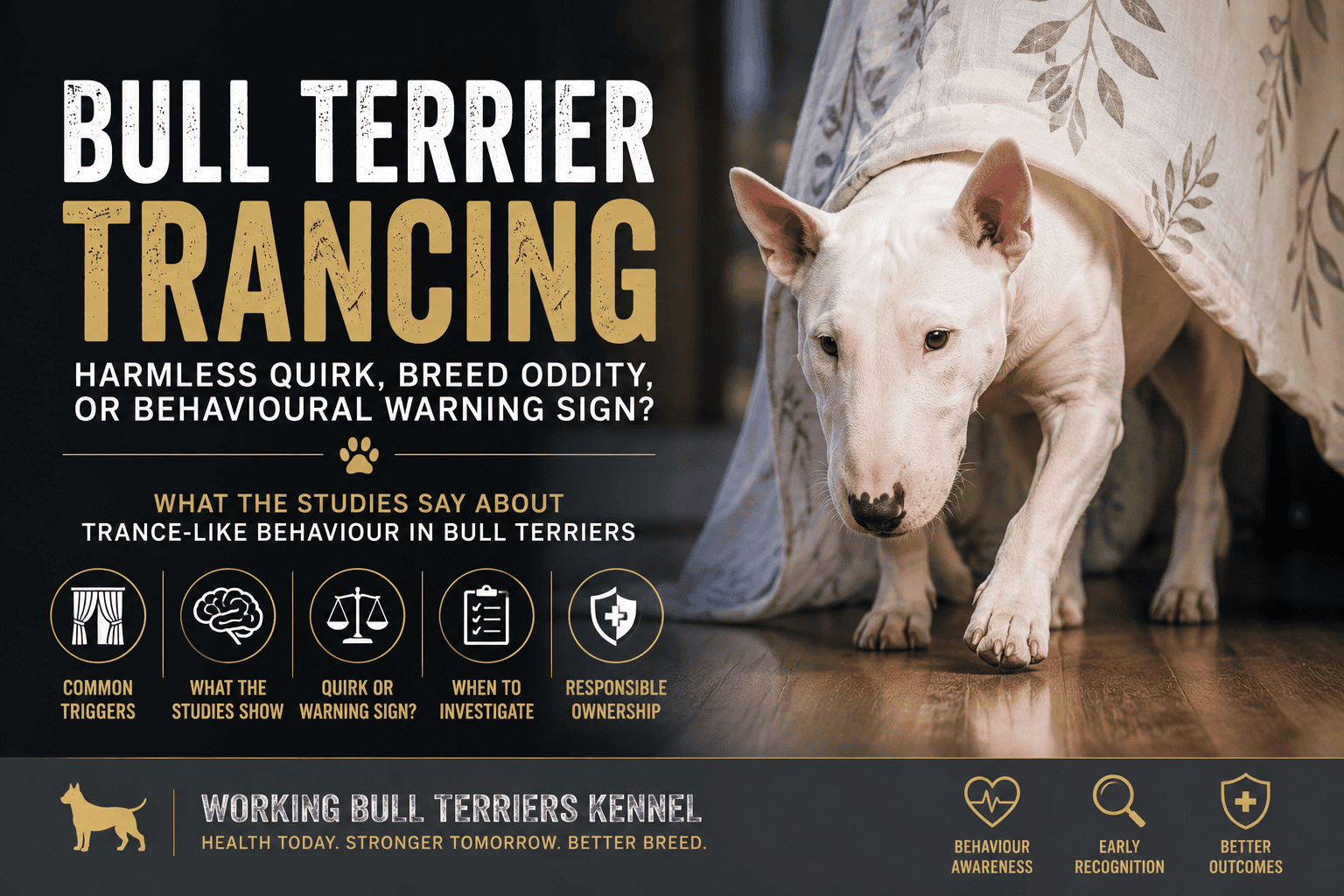
Bull Terrier Trancing: Harmless Quirk, Breed Oddity, or Behavioural Warning Sign?
Bull Terrier trancing, also called ghost walking or weed walking, is one of the breed’s strangest behaviours. This article explains what trancing looks like, when it may be harmless, when trance-like behaviour becomes concerning, and why owners should watch for signs such as poor responsiveness, tail chasing, fly snapping, freezing, glazed eyes, aggression, or seizure-like…
-
The Adolescent Switch: When Your Sweet Bull Terrier Puppy Turns Into a Stubborn, High-Arousal Tank
Bull Terrier adolescence can feel like a sudden switch. Around 8–12 months, a sweet puppy may become stronger, pushier, more distracted, more mouthy, and harder to guide. This article explains why the adolescent switch happens, why it is not a dominance problem, and how structure, sleep, leash focus, calm consequences, controlled freedom, and better engagement…
-
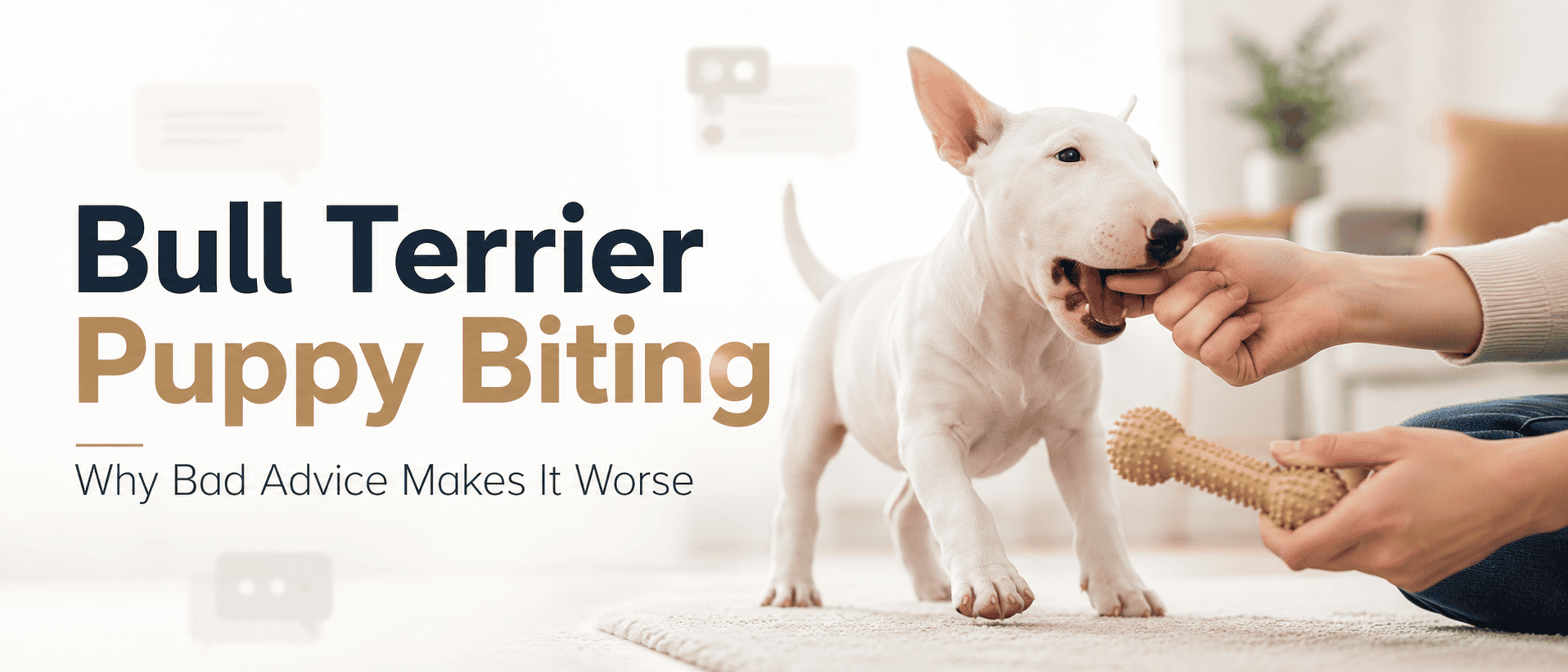
Bull Terrier Puppy Biting: When Bad Online Advice Becomes the Bigger Problem
Bull Terrier puppy biting can be intense, painful, and frightening for new owners. This article explains why hard puppy biting should not be ignored, why bad online advice can make the problem worse, and why young Bull Terriers need structure, sleep, bite-inhibition work, calm consequences, legal chewing outlets, and better owner education.
-
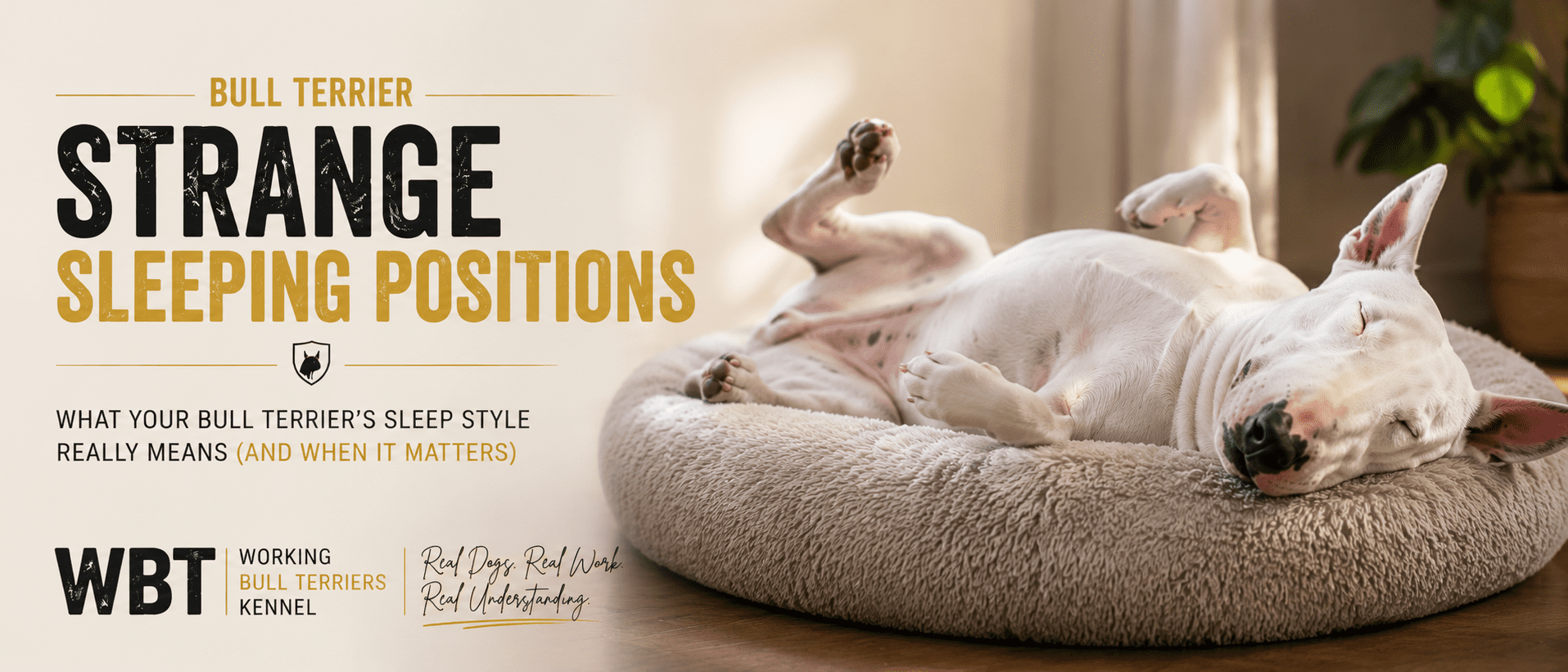
Bull Terrier Strange Sleeping Positions
Bull Terrier strange sleeping positions are often funny, dramatic, and completely normal. This article explains why Bull Terriers sleep upside down, curled tightly, stretched out, pressed against people or furniture, under blankets, or in positions that look impossible — and when a change in sleep position may deserve closer attention.
-
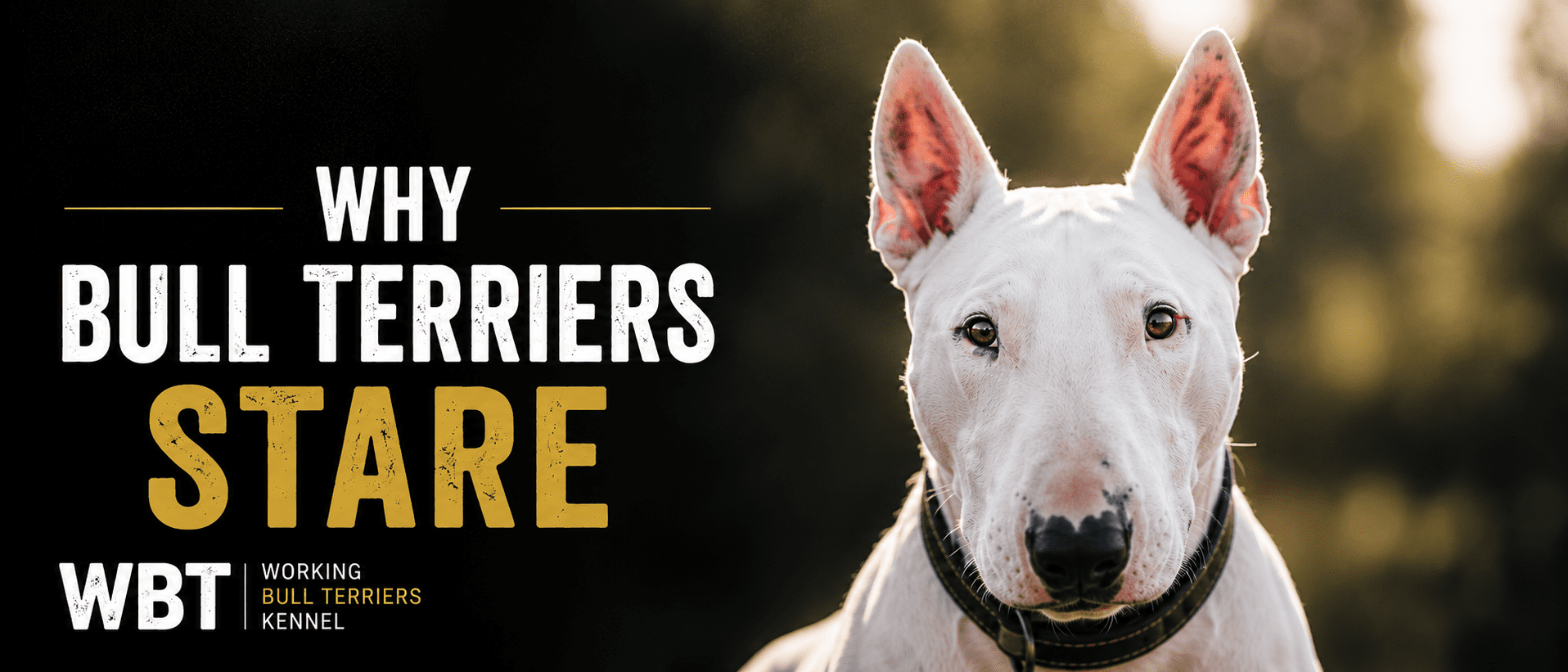
Why Bull Terriers Stare
Bull Terriers stare for many reasons: attention, affection, expectation, food interest, confusion, excitement, or fixation. This article explains what the stare really means, how to read the body language behind it, and when owners should calmly interrupt or investigate the wider behaviour pattern.
-
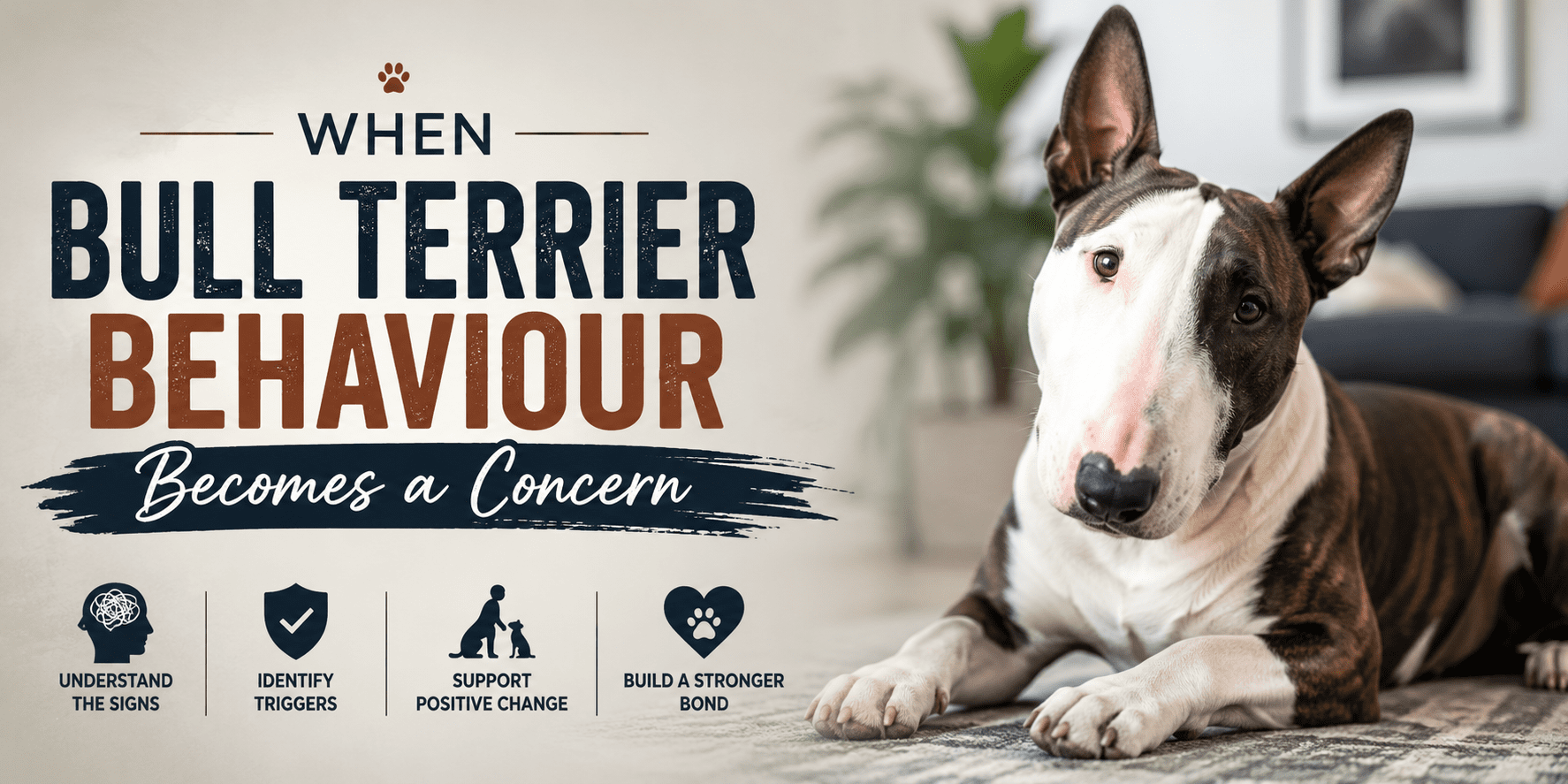
When Bull Terrier Behaviour Becomes a Concern
Bull Terriers are naturally funny, intense, expressive, and physical, but some behaviours can become a concern when they escalate, become unsafe, or are difficult to interrupt. This article explains the signs owners should notice before small patterns become serious behaviour problems.
-
Are Bull Terriers Stubborn or Just Misunderstood?
Are Bull Terriers stubborn? Learn why many stubborn-looking behaviours come from confusion, overexcitement, weak engagement, poor motivation, or missing structure.
-
Why More Exercise or Medication Alone Will Not Fix Many Bull Terrier Behaviour Problems
Bull Terrier behaviour problems are rarely fixed by more exercise or medication alone. Learn why structure, routine, recovery, and training matter.