-
Tail Chasing in Bull Terriers: Quirk, Compulsion, or Neurological Warning Sign?

Bull Terrier tail chasing can look funny, but in some dogs it may signal stress, compulsive behaviour, lowered responsiveness, sensory sensitivity, or possible neurological involvement. This article explains what the Bull Terrier studies show, when spinning may be harmless, when it becomes concerning, and what…
-
The Adolescent Switch: When Your Sweet Bull Terrier Puppy Turns Into a Stubborn, High-Arousal Tank

Bull Terrier adolescence can feel like a sudden switch. Around 8–12 months, a sweet puppy may become stronger, pushier, more distracted, more mouthy, and harder to guide. This article explains why the adolescent switch happens, why it is not a dominance problem, and how structure,…
-
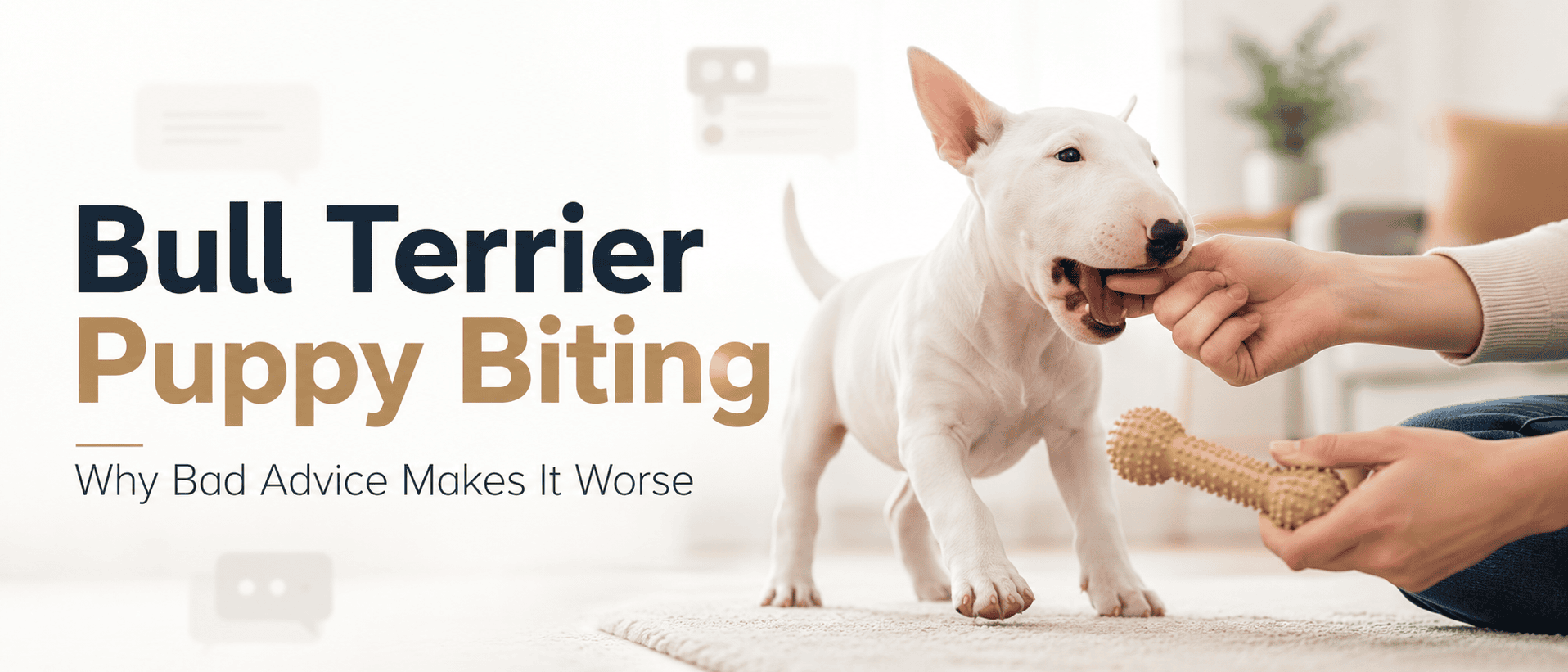
Bull Terrier Puppy Biting: When Bad Online Advice Becomes the Bigger Problem
Bull Terrier puppy biting can be intense, painful, and frightening for new owners. This article explains why hard puppy biting should not be ignored, why bad online advice can make the problem worse, and why young Bull Terriers need structure, sleep, bite-inhibition work, calm consequences,…
-
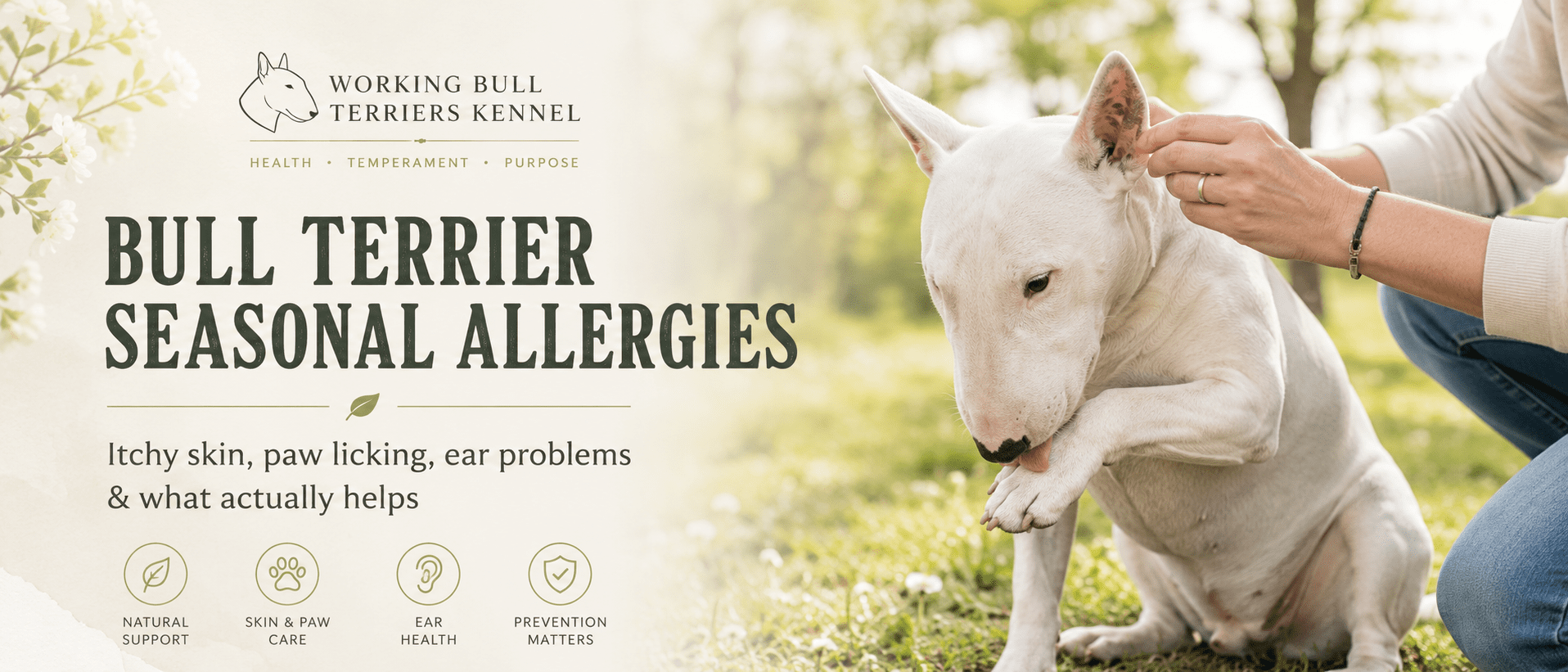
Bull Terrier Seasonal Allergies: Itchy Skin, Paw Licking, Ear Problems and What Actually Helps
Bull Terrier seasonal allergies often show through itchy skin, paw licking, red feet, face rubbing, ear problems, yeast smell, restless sleep, and behaviour changes. This guide explains what actually helps, what is mostly myth, and when your dog needs veterinary support.
-
Bull Terrier Strange Sleeping Positions
Bull Terrier strange sleeping positions are often funny, dramatic, and completely normal. This article explains why Bull Terriers sleep upside down, curled tightly, stretched out, pressed against people or furniture, under blankets, or in positions that look impossible — and when a change in sleep…
-
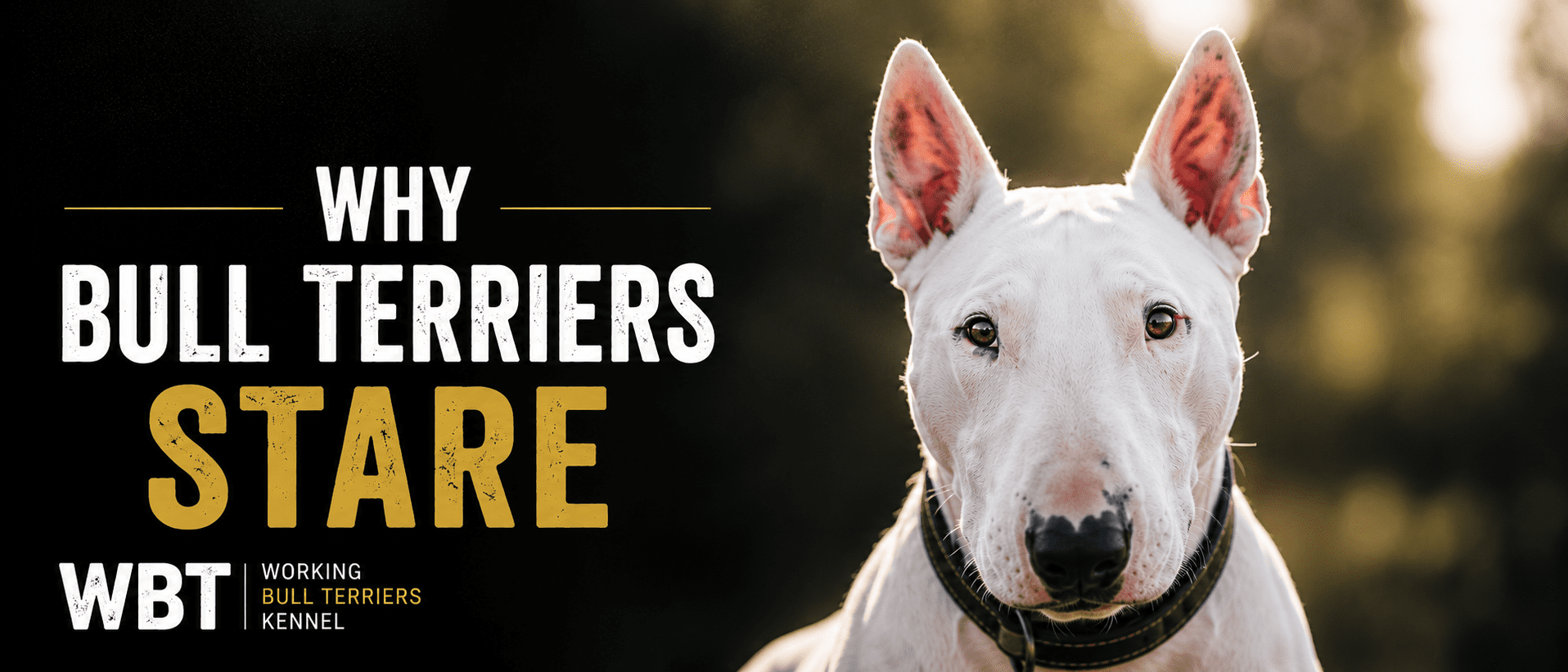
Why Bull Terriers Stare
Bull Terriers stare for many reasons: attention, affection, expectation, food interest, confusion, excitement, or fixation. This article explains what the stare really means, how to read the body language behind it, and when owners should calmly interrupt or investigate the wider behaviour pattern.
-
Focus Games for Bull Terriers
Focus games for Bull Terriers help build attention, engagement, owner connection, leash focus, and better training foundations. This article explains simple focus games owners can use to teach their Bull Terrier to check in, recover from distractions, follow movement, and stay mentally connected during training.
-
Why Most Owners Accidentally Teach Their Dog to Ignore Them
Many dogs do not ignore commands because they are stubborn. They ignore because owners accidentally teach cues to become optional through repetition, unclear follow-through, too much talking, and poor timing. This article explains how it happens and how Bull Terrier owners can rebuild clearer communication.
-
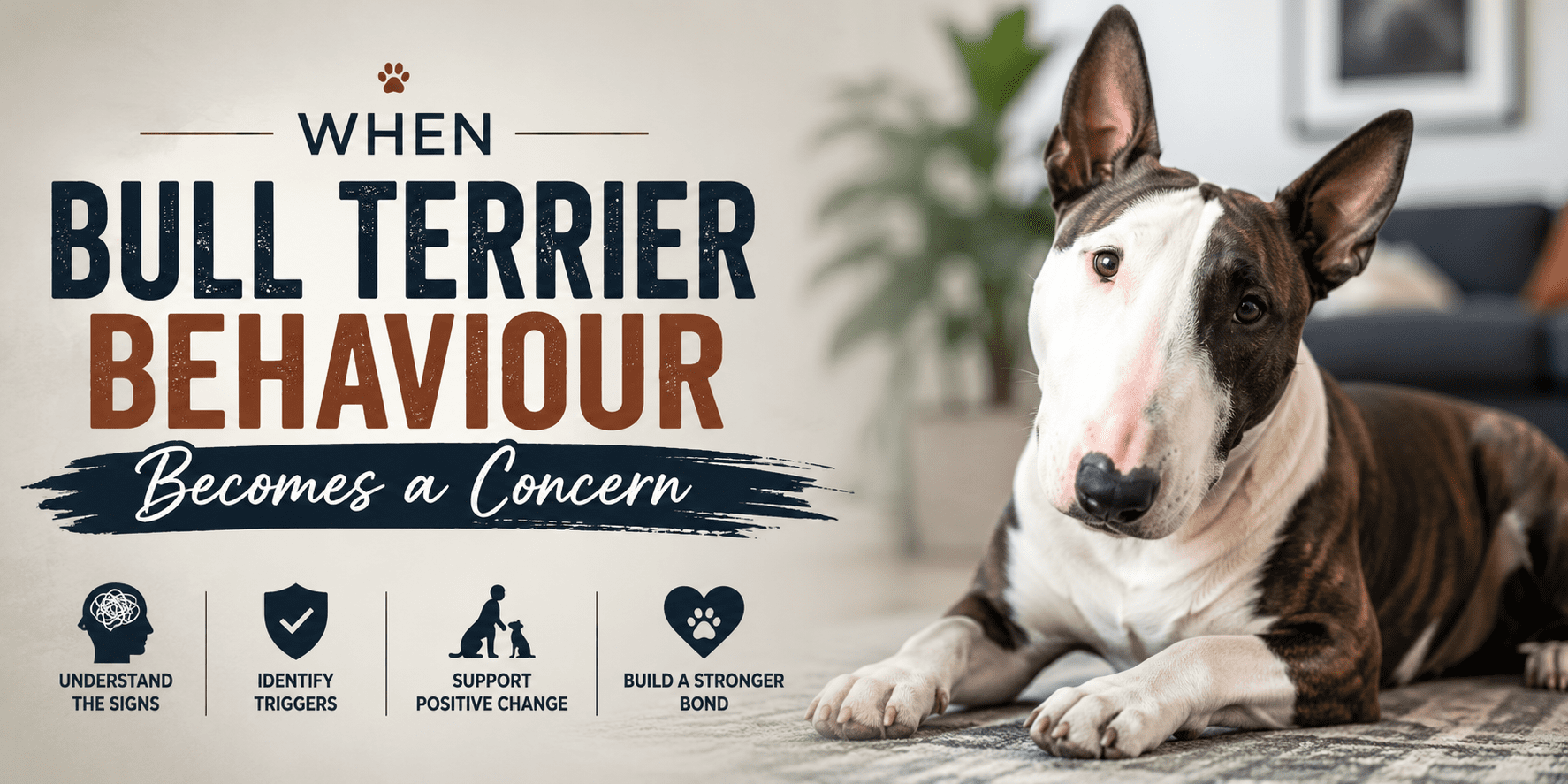
When Bull Terrier Behaviour Becomes a Concern
Bull Terriers are naturally funny, intense, expressive, and physical, but some behaviours can become a concern when they escalate, become unsafe, or are difficult to interrupt. This article explains the signs owners should notice before small patterns become serious behaviour problems.
-
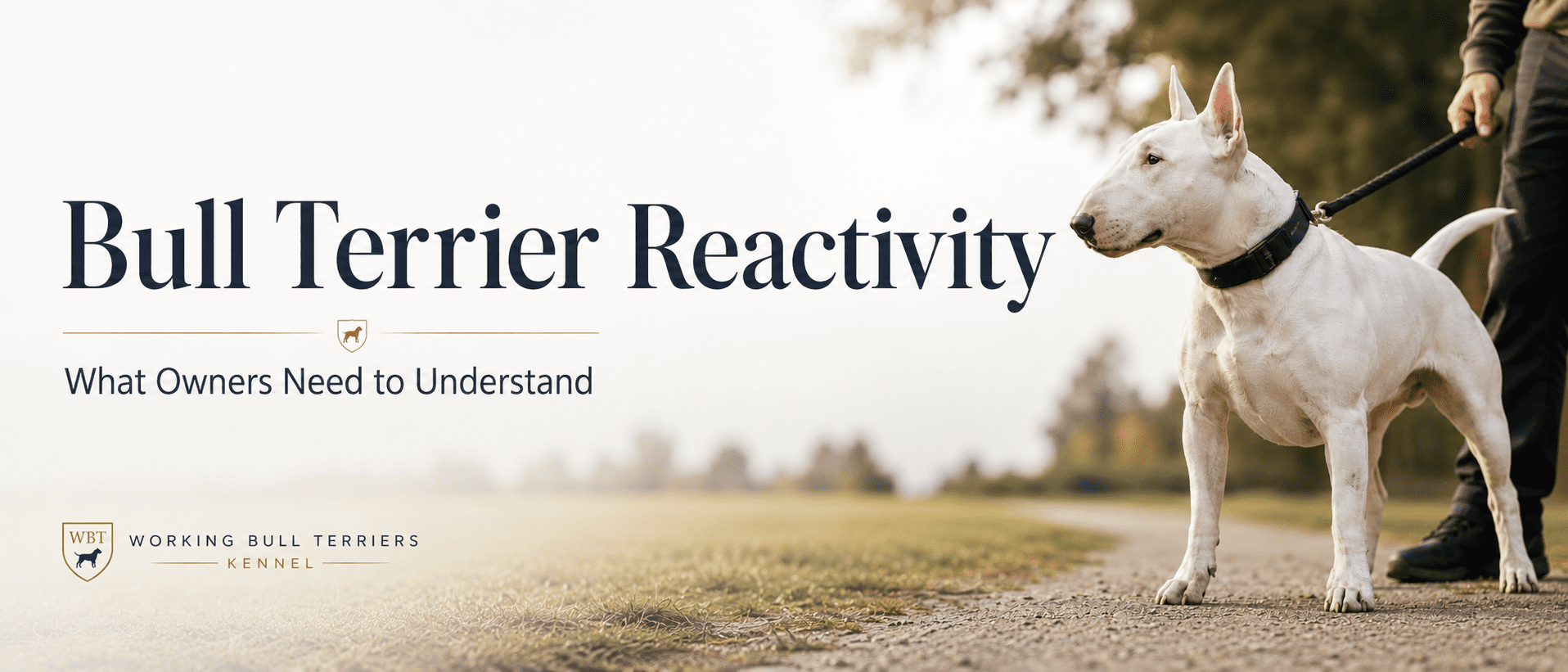
Bull Terrier Reactivity: What Owners Need to Understand
Bull Terrier Training & Behaviour Problems Bull Terrier Reactivity: What Owners Need to Understand 📅 June 25, 2026 ⏱ 16 min read ✍️ By Working Bull Terriers Kennel Bull Terrier reactivity is one of the most misunderstood behaviour problems in the breed. Many owners describe…

Bull Terrier Blog
Bull Terrier training, behaviour, health, history, and owner education.
The Working Bull Terriers Kennel blog is built for Bull Terrier owners who want more than generic dog advice. Here you will find breed-specific articles about training, behaviour, puppy development, daily structure, health, ownership, history, and life with one of the most misunderstood breeds in the dog world.
Choose a topic below to browse articles by category. If you want a structured learning path instead of browsing individual articles, open the WBT Learning Library.
Browse Bull Terrier articles by category
Bull Terrier Training
Focus, structure, engagement, leash manners, obedience foundations, and real-life control.
View training articles →Bull Terrier Behaviour
Reactivity, frustration, overexcitement, boundary testing, quirks, and misunderstood behaviour.
View behaviour articles →Bull Terrier Puppies
Puppy biting, early structure, crate training, social development, confidence, and better foundations.
View puppy articles →Life With Bull Terriers
Breed personality, daily life, humour, owner reflections, and the reality of living with this breed.
View life articles →Bull Terrier Health & Care
Everyday wellbeing, responsible care, grooming, nutrition awareness, exercise, and prevention.
View health articles →Bull Terrier History
Origins, purpose, working background, old bloodlines, character development, and preservation.
View history articles →Bull Terrier Winter Arc
Structure, discipline, mindset, conditioning, consistency, and quieter-season training habits.
View Winter Arc articles →WBT News & Updates
Book releases, educational projects, online training updates, kennel news, and brand developments.
View WBT updates →