
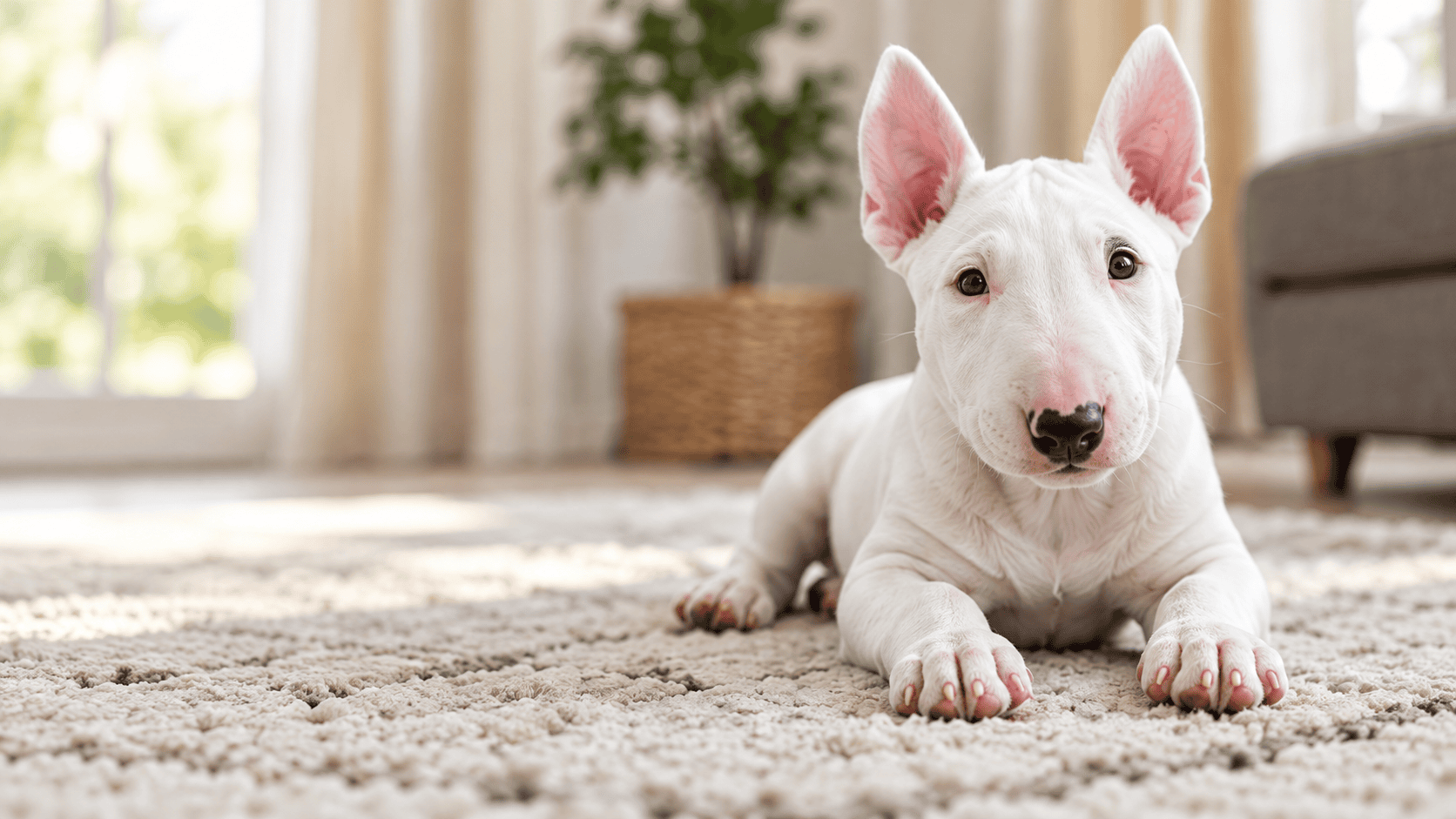
Bull Terrier Puppy Structure
Bull Terrier puppy structure: Structure before freedom.
A calmer puppy starts with predictable routines, fair boundaries and clear communication. Give your Bull Terrier a world it can understand before expecting self-control.
The foundation
Clarity creates confidence.
Structure is not about making a Bull Terrier puppy quiet or obedient every minute. It is about creating clear daily patterns, so your puppy knows what happens next, what choices work and where it can relax.
A predictable rhythm
Use regular opportunities for meals, toilet breaks, short play, training and sleep. Predictability reduces guesswork for both puppy and owner.
Freedom with supervision
Let your puppy explore in areas where you can guide choices. Expand access gradually as the puppy learns how to succeed.
Rest before overarousal
Do not wait for frantic biting, jumping or zoomies to signal a break. Protect quiet recovery time before the puppy becomes overtired.
The five pillars
A calmer, more confident puppy.

Routine
Take your puppy out after waking, eating and play. Keep meals, activity and quiet time predictable without turning life into a rigid timetable.

Rest
Give your puppy a quiet, comfortable place to sleep. Overtired puppies often struggle with biting, frustration and switching off.

Boundaries
Use gates, a safe rest area and supervision to prevent unwanted habits from being rehearsed. Make the right choice easy before correcting mistakes.

Freedom
Build freedom in stages. Start with small, successful opportunities, then offer more space and independence when your puppy is ready.

Calm habits
Notice and reward settling, choosing a chew and responding to you. Do not reserve all your attention for moments of chaos.
A simple day
Small steps. A big difference.
A useful puppy routine is a rhythm, not a military schedule. Alternate activity with recovery, and adjust the timing to the puppy in front of you.
Wake & toilet
Go straight to the toilet area and reward success calmly.
Play & train
Keep play focused, brief and easy to end. Practice one useful skill.
Rest & recover
Offer a calm space before excitement turns into exhaustion.
Repeat calmly
Observe your puppy and repeat the pattern without forcing a clock.
Structure is not restriction
Structure is NOT restriction.
A Bull Terrier puppy should explore, play, make choices and enjoy life. Structure makes those experiences safer and more successful. It replaces constant reactions with thoughtful guidance — not harshness or punishment.
✓ DO
- Keep a dependable daily rhythm.
- Take your puppy out after key activities.
- Provide enough rest and appropriate chews.
- Use gentle, consistent boundaries.
- Supervise exploration and add freedom gradually.
- Reward calm behaviour when it happens naturally.
× AVOID
- Unsupervised access to the whole house too soon.
- Inconsistent rules that change by mood.
- Endless excitement when your puppy needs sleep.
- Waiting for destructive habits before intervening.
- Harsh corrections or using rest spaces as punishment.
- Expecting adult self-control from a young puppy.
WBT resource
Make the first months count.
Bull Terrier Puppy Training Guide
Go beyond isolated tips. Our practical puppy guide brings routines, foundations, everyday manners and breed-specific understanding together in one clear resource.
 Real-world advice for real life with a Bull Terrier.
Lifelong benefits
Raise a puppy who understands the world.
Give your puppy clear guidance, enough rest and meaningful experiences now. The goal is not a perfectly quiet dog — it is a confident Bull Terrier that knows how to live, learn and work with you.