







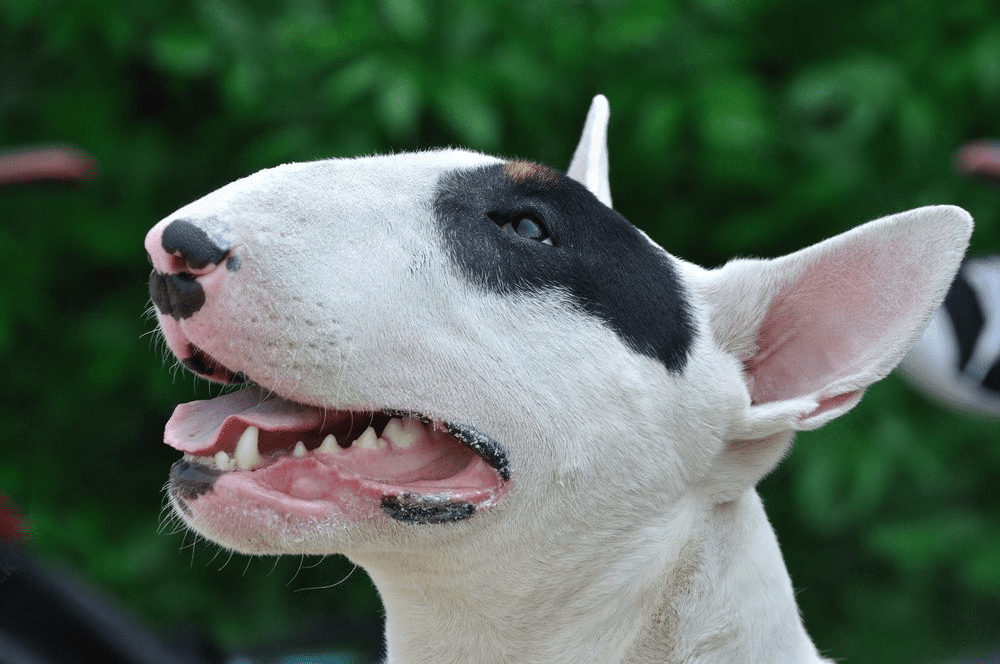
Inside the Bull Terrier Mind: Why Training Requires Patience, Not Power
Understanding the Breed Is the Key to Training Success
“He knows what I’m asking… he’s just being stubborn.”
“My last dog picked this up in a day—why won’t this one?”
“She’s smart… but she only listens when she wants to.”
If you’ve ever said (or thought) any of those things about your Bull Terrier, you’re not alone. And you’re not doing anything wrong.
You’re just working with a breed that plays by different rules.
Bull Terriers don’t learn like retrievers. They don’t aim to please like shepherds. They’re something else entirely—independent, emotional, clever, and hilarious.
Training them isn’t about overpowering them. It’s about understanding how they think. And once you do? Everything changes.
🧠 What Makes Bull Terriers So Unique
Bull Terriers are often misunderstood because they don’t fit into the typical “obedient dog” mold. But that’s not a flaw—it’s what makes them extraordinary.

Not naughty. Not stubborn. Just Bullie brilliance in full force.
🖼️ Get the “Bully Wisdom” poster here and hang it where you train—because it’s not just decoration, it’s a reminder.
Here’s what sets them apart:
🔸 1. They’re Independent Thinkers
Bull Terriers like to make their own decisions. They don’t blindly follow commands—they assess the situation first. To them, every command is a negotiation, not an order.
🔸 2. They’re Emotionally Intelligent
They feel your energy. If you’re frustrated, they shut down. If you’re excited, they get wild. If you’re calm and clear? That’s when the magic happens.
🔸 3. They Have a Sense of Humor
Bull Terriers will repeat things that make you laugh. If you giggle when they steal your sock, they’ll do it again. They read you. They love reactions. Training must be a game—not a chore.
🐾 You’re not dealing with a robot. You’re dealing with a personality.
❌ Why Harsh Methods Backfire
Some trainers still promote outdated techniques—yelling, leash jerks, “showing dominance.” Those might get quick results with some dogs, but not with Bull Terriers.
With this breed, harshness doesn’t create respect. It creates resistance.
- Yell at a Bull Terrier, and you break the bond.
- Force a behavior, and they’ll learn to avoid—not understand.
- Punish confusion, and they’ll stop trying altogether.
⚠️ Power-based methods don’t work on a dog that thinks for itself.
What does work? Patience. Motivation. Partnership.
🧩 What Patience Looks Like in Real Training
Let’s be clear: patience doesn’t mean being passive. It means being consistent, calm, and flexible even when things don’t go to plan.
Here’s how that looks in real life:
- 🐶 You repeat a command without raising your voice—even if they ignore it the first three times.
- 🐶 You let your dog sniff around and re-engage instead of yanking the leash.
- 🐶 You break training into three 5-minute sessions instead of one overwhelming 20-minute battle.
- 🐶 You reward tiny wins and build momentum, rather than expecting perfection overnight.
Training is not a race—it’s a relationship.
🤝 Replace Power with Partnership
Bull Terriers thrive when training feels like a shared activity, not a one-way command.
- Instead of demanding obedience, invite cooperation.
- Instead of punishing mistakes, redirect with clarity.
- Instead of being “the boss,” be the trusted guide.
The more you shift your mindset from “I need to control this dog” to “I want to connect with this dog,” the better your results will be.

👉 If this feels like your life sometimes, you’re not alone.
Grab the T-shirt here and wear it as your daily reminder: patience wins.
💬 Patience Isn’t Weakness—It’s What Makes You Strong
Anyone can shout. Anyone can yank a leash.
But it takes skill and emotional maturity to stay calm, observant, and flexible.
The best Bull Terrier owners we’ve met over the years weren’t just good trainers—they were great listeners, adaptable leaders, and patient humans.
Their reward? A dog that not only obeys but trusts, loves, and wants to work with them.
📘 Want a Bull Terrier-Specific System That Actually Works?
We created the Bull Terrier Training Guide: Step by Step for people like you.
People who love the breed but feel stuck, frustrated, or tired of generic advice that doesn’t fit.
Inside the book:
- The full B.E.D.F. Method (Bond – Engagement – Drive – Focus)
- Real examples from real dogs
- Behavior solutions tailored to the breed
- Private video tutorials and a personal guidance offer

👇 Missed Our Last Posts?
- ✅ [Solving the 5 Most Common Bull Terrier Behavior Problems]
- ✅ [The B.E.D.F. Method: How We Train Bull Terriers—When Nothing Else Works]
We recommend reading all three as a connected series—your complete foundation for better Bull Terrier training.
Final Thought
Bull Terriers aren’t difficult—they’re different.
And once you understand their mind, you’ll stop fighting them… and start working with them.
Patience isn’t the last resort—it’s the first requirement.
The reward? A dog that’s not only trained… but truly bonded with you.


Leave a Reply