







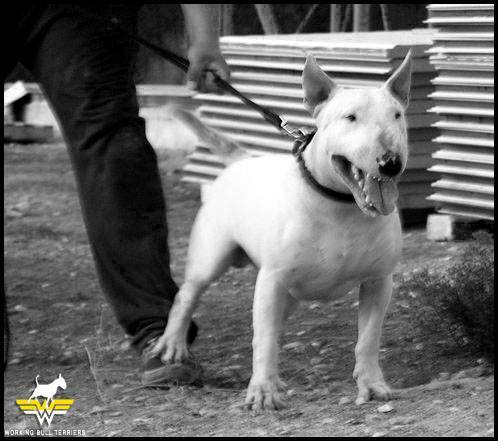
Is Bull Terrier Sudden Rage Syndrome even real? Is it as bad as it sounds? Is this a common issue?
In this article, we will explore everything related to Bull Terrier Sudden Rage Syndrome (SRS). The condition is very real, very scary, and fortunately, very rare.
Controversy and Criticism of Sudden Rage Syndrome
The concept of Sudden Rage Syndrome has sparked debate among veterinarians, behaviorists, and dog enthusiasts. Critics argue that what is often labeled as SRS may be the result of poor training. It could also result from a lack of socialization or undiagnosed medical issues. Others suggest that SRS is a misunderstood behavioral quirk in certain breeds, often exaggerated by media or selective breeding practices. In the veterinary world, SRS remains a “gray area,” with more research needed to fully understand it.
Initially, I was skeptical about the existence of SRS. I believed it was simply a matter of untrained dogs or improper care. I thought that with the right training and behavior modification, these dogs could be rehabilitated. I was wrong.
Before diving into more details about SRS, let me share my personal experience with this condition.
Personal Experience
For those unfamiliar with me, I am a professional dog trainer with 20 years of experience, and Bull Terrier Breeder. Over the years, I have encountered five Bull Terriers diagnosed with Sudden Rage Syndrome. Believe me when I say it was terrifying.
I’ve trained many Bull Terriers for protection work. I experienced firsthand how a Bull Terrier can change. They transform from a calm, loving dog to a powerful, driven protector in less than a second. But Sudden Rage Syndrome is something entirely different. It unlocks a new level of fear because the aggression comes without warning.

These were dogs that came from loving families, who were well-socialized and treated with care. Their owners had done everything right. Yet, despite all efforts—including my own attempts to rehabilitate them—I couldn’t train them. I worked hard, consulted every veterinarian and trainer I knew and researched endlessly.
Out of the five cases, three dogs were the same age. Upon checking their passports, I discovered they were littermates. These dogs were sold by a person who purchased them cheaply for profit. This raised a red flag for me: genetics.
The two other dogs weren’t related but shared an interesting characteristic—they both had polycystic kidneys. While veterinarians might argue that this condition is unrelated to SRS, I came across other dog owners with similar findings. While this may be coincidental, it’s worth mentioning in case someone else has observed the same correlation.
Defining Sudden Rage Syndrome (SRS)
Sudden Rage Syndrome refers to an abnormal, explosive outburst of aggression in a dog, seemingly without provocation. It’s a rare and unpredictable condition. It often leaves owners shocked. Afterward, their dog returns to a calm or even confused state. The key elements that define SRS are:
– Unpredictability: The aggression appears out of nowhere, without clear warning signs, making it especially dangerous.
– Extreme Intensity: The dog exhibits an unusually high level of aggression, often directed at other dogs, objects, or even people.
– Temporary Amnesia or Confusion: After the episode, dogs may seem disoriented or behave as if nothing unusual occurred. This “post-episode” calmness is one of the most perplexing aspects of SRS.
Characteristics of SRS Episodes
SRS episodes are brief but intense. A dog can appear completely normal one moment and in a matter of seconds, enter a highly aggressive state. Common behaviors during an episode include:
– Snarling, Biting, and Attacking: The aggression can be directed at anyone or anything in the vicinity.
– Zoning Out: Some dogs appear to “zone out” before an episode, staring into space with dilated pupils as if in a trance-like state.
– No Response to Commands: During the episode, the dog often doesn’t respond to commands or calming attempts, making it hard to manage.
– Post-Episode Calmness: Once the aggression subsides, the dog may act confused or even fearful, as though they are unaware of what just occurred.
Possible Causes of SRS
Despite ongoing research, the causes of Sudden Rage Syndrome remain elusive. Several theories have been proposed:
1. Neurological Disorders
The most widely accepted theory suggests that SRS may be related to neurological dysfunction. This could involve abnormal brain activity similar to seizures, causing sudden and uncontrollable aggression. Possible neurological causes include:
– Epileptic-like Seizures: Some researchers compare SRS to partial seizures, where abnormal electrical brain discharges trigger sudden aggressive behavior.
– Abnormal Brain Chemistry: Imbalances in neurotransmitters, which help brain cells communicate, could lead to erratic, aggressive outbursts.
2. Genetic Predisposition
Certain breeds, including Bull Terriers, are reported to experience SRS more frequently, suggesting a possible genetic link. The theory is that specific bloodlines or individual dogs may be more prone to neurological disorders that manifest as SRS.
Breed-Specific Inheritance: Besides Bull Terriers, English Springer Spaniels and Cocker Spaniels are also linked with SRS. In Bull Terriers, certain bloodlines may carry genetic factors that increase susceptibility to this behavior.
Why Bull Terriers?
Bull Terriers are often associated with Sudden Rage Syndrome. Several factors may explain this connection:
– High-Energy, Stubborn Nature: Bull Terriers are energetic and strong-willed. Without proper training, their behaviors can be misinterpreted as signs of SRS.
– Genetics: As mentioned, certain bloodlines may carry a higher risk of neurological problems.
– Breed Reputation : Bull Terriers, with their muscular build and powerful jaws, have often been misunderstood as inherently aggressive. Although most Bull Terriers are affectionate and friendly, rare cases of sudden aggression fuel myths about SRS.
Diagnosis: A Challenge
Diagnosing SRS is difficult because it lacks clear triggers or physical symptoms. Veterinarians typically diagnose it by ruling out other medical or behavioral conditions. Diagnostic methods include:
– Neurological Testing: MRI or CT scans are used to detect brain abnormalities, such as tumors or lesions.
– Behavioral Evaluation: Veterinary behaviorists observe the dog’s behavior over time to detect any patterns or triggers.
– Medical Tests: Blood tests and hormone level checks (e.g., thyroid function) help rule out metabolic causes of aggression.
Treatment and Management
While there’s no cure for Sudden Rage Syndrome, managing the condition is possible through a combination of medical and behavioral interventions.
- Medical Treatment
– Anti-Seizure Medications: Drugs like phenobarbital or potassium bromide, commonly used to treat epilepsy, may help control SRS.
– Anxiety Medications: Sedatives or anxiolytics may help reduce the frequency and intensity of episodes.
– Hormone Therapy: If thyroid imbalances are discovered, hormone replacement may alleviate aggressive behavior.
- Behavioral Therapy
– Low-Stress Environment: Dogs with SRS should be kept in a calm, structured environment with minimal stressors.
– Positive Reinforcement: Training should focus on rewarding good behavior, avoiding punishment that could worsen the situation.
– Avoiding Triggers: Identifying and avoiding known triggers may help reduce the risk of episodes.
Final Thoughts on Sudden Rage Syndrome in Bull Terriers
While Sudden Rage Syndrome is a rare and concerning condition, it’s important to remember that most Bull Terriers are loving and loyal companions. It’s crucial to distinguish between true SRS and other behavioral or medical problems that can lead to aggression.
Responsible breeding, early socialization, and consistent training are key to preventing behavioral issues, including sudden aggression. If a dog does show signs of unexplained aggression, consulting with a veterinarian and a dog trainer is essential to rule out other causes and develop an appropriate management plan.
Bull Terrier owners can ensure the best possible outcomes for their dogs. They can do so by understanding and approaching Sudden Rage Syndrome with care and diligence.
📚 Want to Raise the Best Bull Terrier You Can?
If you enjoyed this article, we’ve got two must-have eBooks written by the team behind Working Bull Terriers Kennel—based on years of real experience with this amazing breed.
🐶 1. Dear Human: 150 Things Your Bull Terrier Would Like You to Know
A humorous, heartfelt guide written from your dog’s perspective—covering training, health, routines, and life together, from the Bull Terrier’s point of view.
📙 2. 20 Essential Rules for Bull Terrier Owners
Packed with real-world advice, this book walks you through everything from puppy training and exercise to behavior, grooming, and building a strong lifelong bond.
🛒 Check out both eBooks—and more—here.
🎁 Special Offer for Our Readers:
Use the promo code WBT10 at checkout to get 10% off anything in our shop—eBooks, merch, training tools, and more!
👉 Visit the shop now.
Thank you for supporting our work and helping your Bull Terrier live their best life! 🐾
Join Our Community
Stay connected with us for more tips, training advice, and updates on our dogs’ journeys. Follow us on social media, subscribe to our newsletter, and participate in our community forums to share your experiences and learn from fellow Bull Terrier enthusiasts.


Leave a Reply