







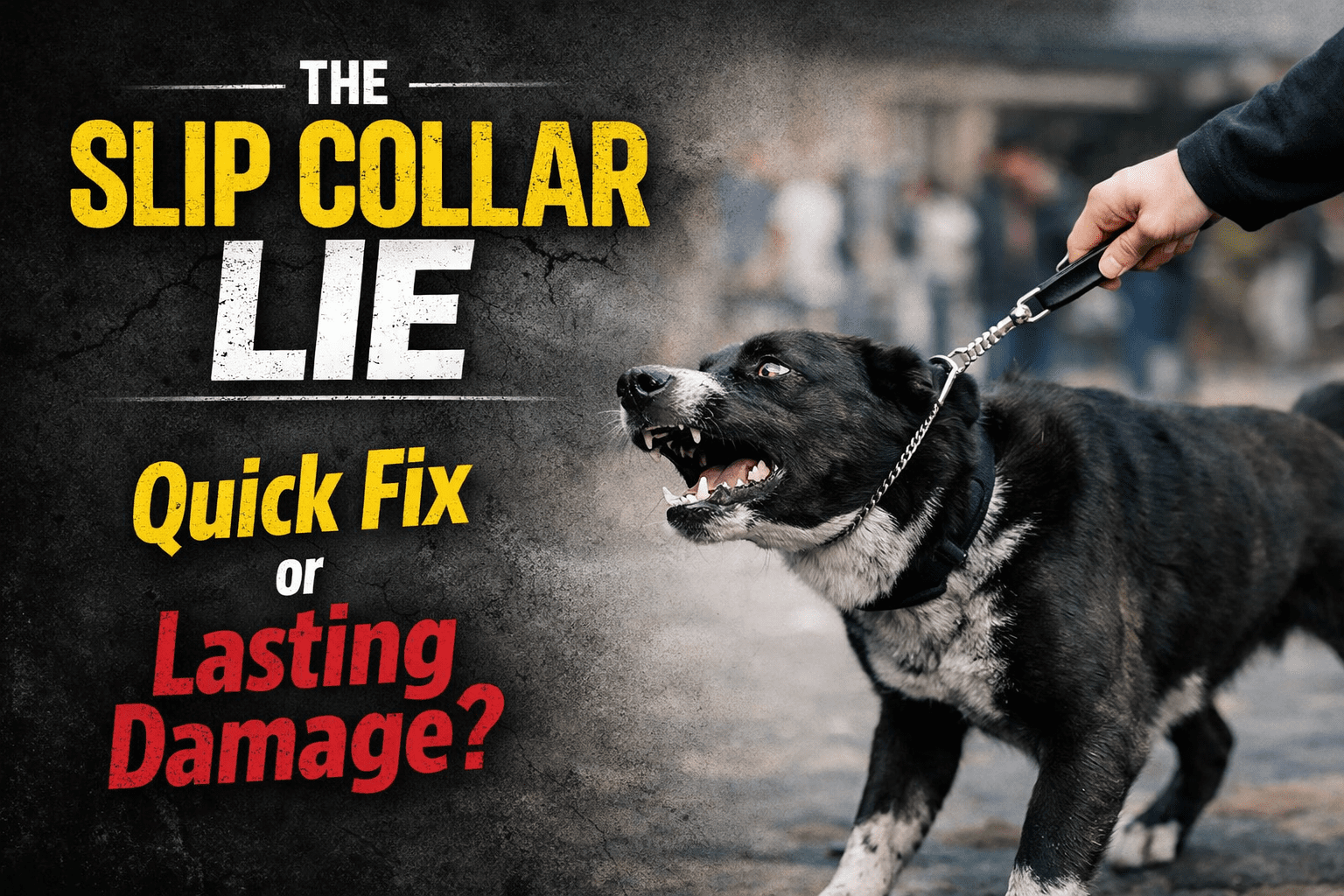
The Slip Collar Trend: When Tools Replace Training
Lately, I’ve been noticing a trend in the dog training world that honestly doesn’t sit well with me.
Slip collars—and similar tools—are being promoted as the “solution” for everything. Pulling on the leash, unwanted behaviors, lack of control… just put this on your dog and the problem is handled.
It sounds simple. It looks effective.
But the reality is very different.
Where This Idea Comes From
To be fair, tools like slip collars or Dominant Dog Collars were not created for the average pet dog.
They came from a very specific context:
- high-drive working dogs
- handler-aggressive dogs
- professional environments where safety was a priority
In the hands of experienced trainers, under very controlled conditions, these tools had a purpose. But somewhere along the way, that context was lost. Today, they’re being presented as something almost anyone can use… on almost any dog. And that’s where the problem begins.
The Real Issue Is Not the Tool
Let’s be clear. The issue is not the collar itself. The issue is how it’s being used—and why. Most owners are not using these tools as part of a structured training system. They are using them as a shortcut.
Instead of teaching a dog how to walk properly, they try to stop the pulling. Instead of building communication, they apply pressure. Instead of creating understanding, they create avoidance.
What the Dog Actually Learns
This is the part most people don’t think about. When a dog is corrected through a slip collar without proper training behind it, the dog does not learn how to walk nicely.
The dog learns how to avoid discomfort. There’s a big difference.
There is no clarity.
No communication.
No real understanding of what is expected.
Only this:
👉 “If I pull, something uncomfortable happens.”
And that leads to confusion, stress, and unstable behavior—especially outside controlled situations.
What Happens Over Time
I’ve seen this many times.
When the tool is removed:
- the dog pulls even more than before
- the owner loses control completely
- previous “improvements” disappear
Why?
Because the behavior was never truly taught. Even worse, many dogs become dependent on the tool. They behave only when wearing it.
And that’s a clear sign of one thing:
👉 The dog was never trained properly.
The Physical Side Nobody Talks About
There’s also something else that doesn’t get enough attention. Repeated pressure on the neck—especially in the hands of inexperienced owners—can lead to physical issues.
I’ve personally seen dogs with trachea sensitivity and related problems from improper use of these tools. We don’t need to exaggerate this. But we also shouldn’t ignore it.
What Proper Loose Leash Walking Actually Means
Another important misunderstanding is this:
Loose leash walking is NOT the same as a heel command. A proper walk should feel natural and relaxed—for both the dog and the owner. A dog doesn’t need to walk glued to your leg.
What matters is simple:
- no tension on the leash
- the dog can move within the length of the leash
- the dog can be in front, behind, or beside you
- the dog follows when you change direction
- you control the speed and the path
That’s a walk.
Not control.
Not pressure.
But cooperation.
There Is a Better Way
Instead of searching for the “right collar,” focus on teaching the behavior. In our training, we use methods like the stop–start approach to teach loose leash walking.
It takes more time.
It takes consistency.
It takes patience.
But it works. Every single time.
Because the dog learns:
- what is expected
- how to respond
- how to move with the handler
Not out of fear or discomfort… But through understanding.
Final Thoughts
Tools can have a place in dog training. But they are not a replacement for training. And they are definitely not the solution for the average dog owner dealing with everyday issues like pulling on the leash.
If your dog only behaves when wearing a specific tool…
👉 then the real work hasn’t been done yet.
Your dog doesn’t need a new collar. He needs clarity, consistency, and proper guidance.
And in a future post, we’ll also talk about another popular topic that creates a lot of confusion:
👉 harnesses.
Because just like collars… they’re often misunderstood too.
If this made you rethink how you approach your dog’s training, you’re not alone. Most owners are not missing effort—they’re missing clarity.
That’s exactly why we created our guides.

Inside, we break things down step by step:
- how to build engagement
- how to teach behaviors like loose leash walking properly
- how to create real communication with your dog
No shortcuts. No gimmicks. Just methods that work in real life.
👉 You can find all our books and training material here :https://workingbullterrierskennel.shop


Leave a Reply