

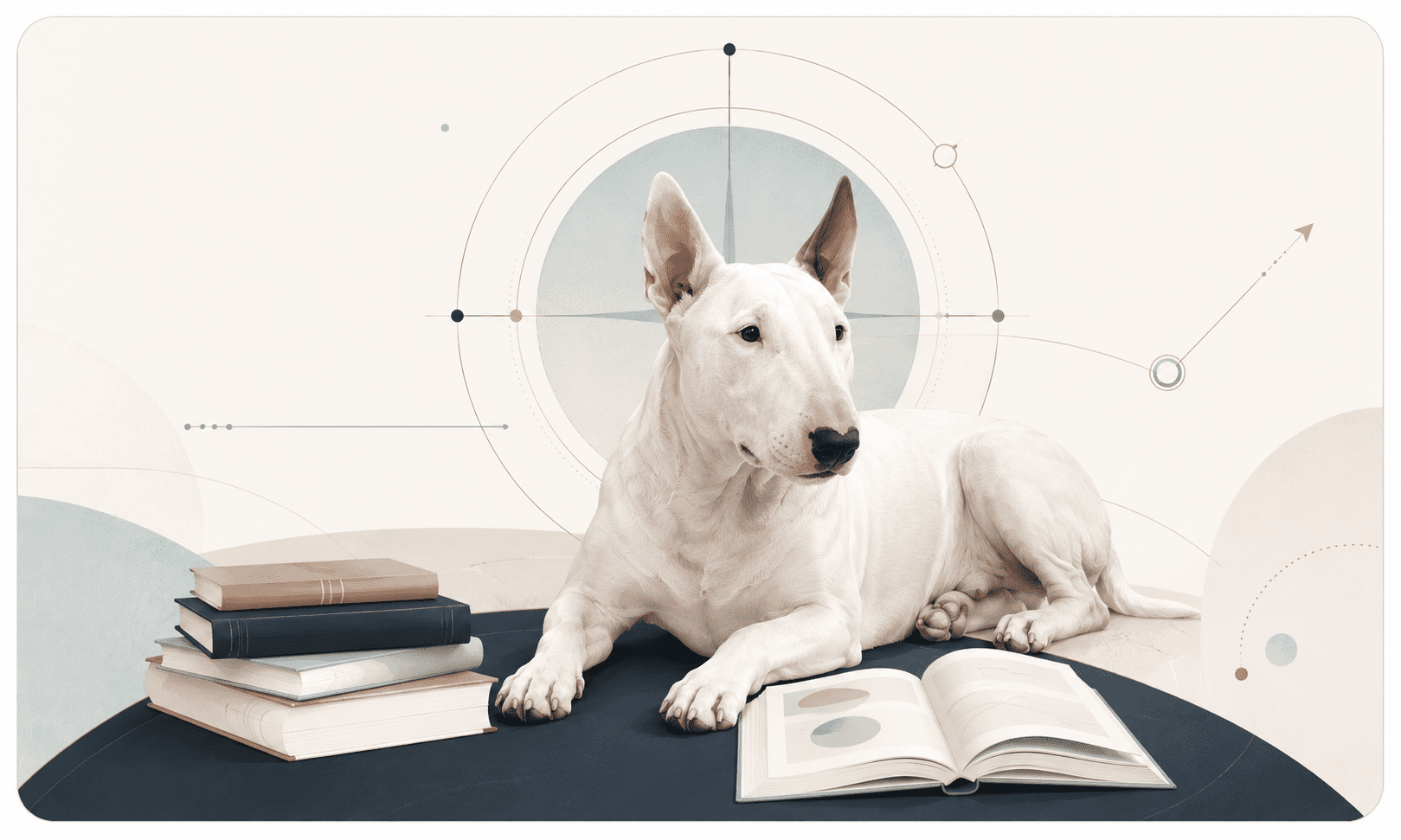


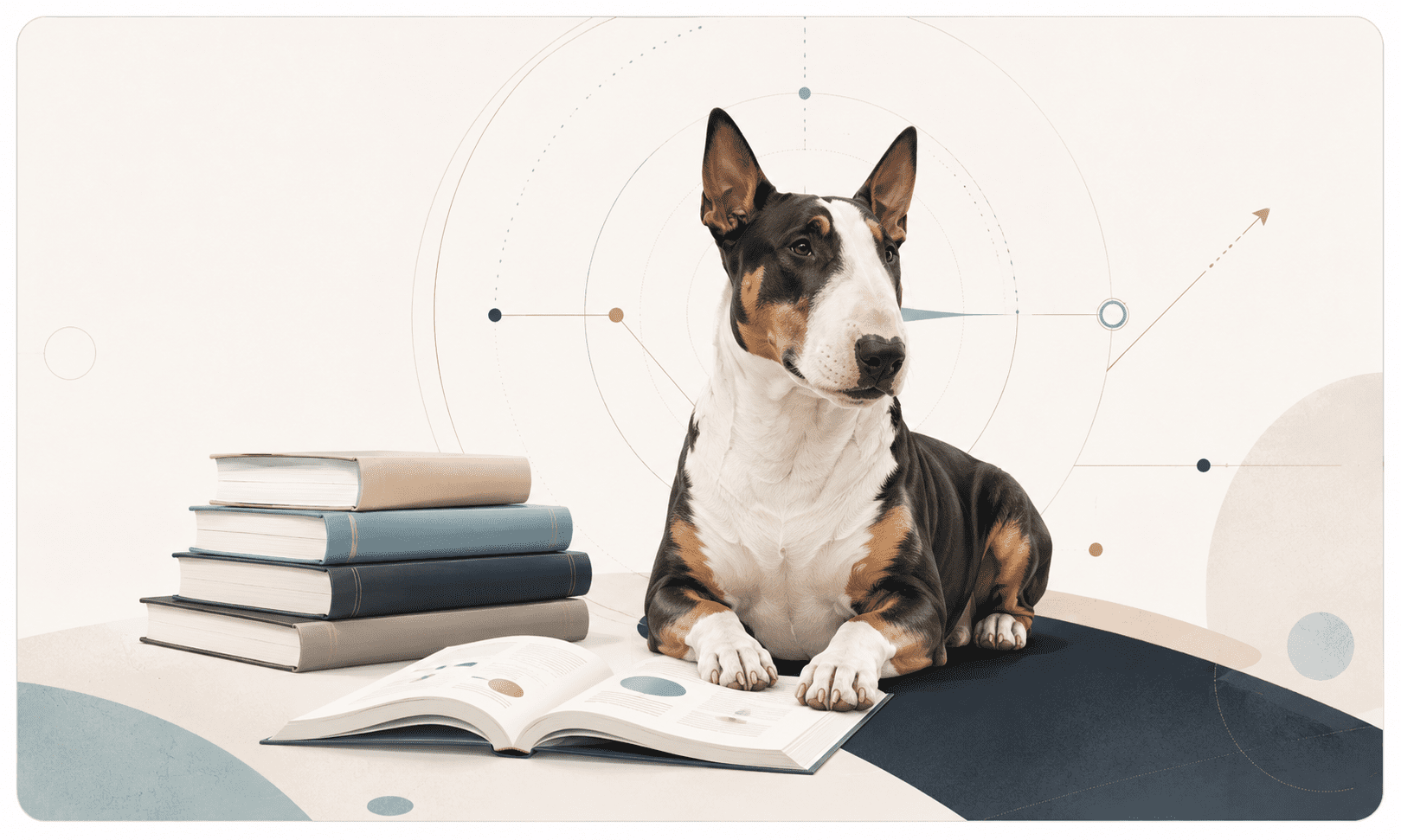



Bull Terriers are different from other breeds in a way that is difficult to explain until you have lived with one.
They are not simply strong dogs. They are not simply funny dogs. They are not simply stubborn dogs. They are a strange, powerful, emotional, physical, intelligent, ridiculous, and deeply individual breed that often refuses to fit neatly into normal dog categories.
This is why people either fall completely in love with them or quickly realize they are not prepared for them.
A Bull Terrier can be affectionate like a family companion, determined like a working terrier, theatrical like a clown, physical like an athlete, sensitive like a much softer dog, and stubborn-looking like a philosopher who is silently questioning your entire training plan.
They are full of contradictions.
They can be funny and intense. Loving and pushy. Sensitive and hard-headed. Playful and serious. Strong and emotionally needy. Independent in thought, but deeply attached to their people.
That combination is what makes the breed so unique.
So, what makes Bull Terriers different from other breeds?
The honest answer is this: Bull Terriers are different because they combine physical power, terrier determination, emotional intensity, humour, sensitivity, and a very specific way of thinking that requires more than generic dog training.
They are not impossible.
But they are not ordinary.
What Makes Bull Terriers Different in Daily Life?
Quick Answer
Bull Terriers are different from other breeds because they combine physical power, terrier determination, emotional intensity, humour, sensitivity, and a very specific way of thinking. They are not impossible dogs, but they are not ordinary dogs either. A Bull Terrier needs structure, engagement, consistency, and an owner who understands the breed beyond basic commands.
Some breeds can quietly blend into a household. They move through the day softly, respond easily to routine, and do not constantly make themselves the centre of attention.
The Bull Terrier is often different.
Many Bull Terriers have presence. They make themselves known. They notice what is happening. They involve themselves. They create moments. They watch, follow, push, stare, question, interrupt, and often behave as if the household is a stage and they are one of the main characters.
This is one of the reasons Bull Terrier owners tell so many stories.
The dog does not simply exist in the home. The dog becomes part of the identity of the home.
They have habits. Routines. Opinions. Dramatic reactions. Strange preferences. Little rituals. Funny sleeping positions. Sudden bursts of energy. Odd fixations. Moments of deep affection followed by moments of complete unreasonable behaviour.
For the right owner, this is part of the magic.
For the wrong owner, it can become exhausting.
A Bull Terrier is not usually the best choice for someone who wants a quiet, low-impact, emotionally simple dog. This breed has weight in the room. Not only physical weight, but emotional and behavioural presence.
They are hard to ignore.
And that is both the charm and the challenge.
They Think Differently
Bull Terriers often think in a way that surprises people.
They are intelligent, but not always in the obedient, eager-to-please style people expect from certain working or sporting breeds. They may understand quickly, but that does not always mean they will respond automatically. They often need clarity, motivation, repetition, structure, and a reason to stay mentally connected to the owner.
This is where many people misunderstand them.
They say the Bull Terrier is stupid.
Then they watch the dog solve a problem, open a door, create a new bad habit, manipulate a routine, or repeat a behaviour that gets exactly the reaction they want from the owner.
That is not stupidity.
That is selective intelligence.
Bull Terriers are often very good at learning what works. If pushing works, they push. If barking works, they bark. If refusing works, they refuse. If making the family laugh works, they repeat the performance. If stealing an item creates a game, they may become experts at stealing.
This is why the owner’s consistency matters so much.
A Bull Terrier does not need confusing freedom. They need clear rules that remain the same tomorrow. They need communication that makes sense. They need training that builds engagement, not just commands. They need an owner who understands that the dog is always learning, even when formal training is not happening.
This is one of the biggest differences from many easier breeds.
With a Bull Terrier, the gaps in your system often become the dog’s favourite playground.
They Are Physical Dogs
Bull Terriers experience the world physically.
They push. Lean. Crash. Spin. Jump. Body-block. Rub. Slam toys. Run in strange patterns. Use their shoulders. Use their chest. Use their whole body when they are excited, playful, frustrated, or affectionate.
This physicality can be hilarious.
It can also be too much.
A friendly Bull Terrier can still knock into people. A playful Bull Terrier can still overwhelm another dog. A happy Bull Terrier can still mouth, grab clothing, or crash into a child if the dog has not learned control. Their body is part of their language, and if that language is not guided, it can create problems in the home.
This is not the same as aggression.
A Bull Terrier may be physical because they are excited, stimulated, playful, or seeking contact. But physical behaviour still needs boundaries. A strong dog does not get to use its body however it wants just because the intention is friendly.
This is why Bull Terrier owners must teach body awareness, calm greetings, controlled play, leash manners, place training, and impulse control early.
The breed’s physical confidence is one of its defining features.
But without structure, that confidence can become chaos.
They Are Funny, But the Humour Can Mislead Owners
Bull Terriers are famously funny.
They do things that seem almost designed to make people laugh. They have unusual expressions, strange timing, dramatic reactions, and a natural talent for turning ordinary life into comedy. They can look serious and ridiculous at the same time. They can make even experienced dog people stop and ask, “What exactly is this dog doing?”
This humour is one of the reasons the breed has such a loyal following.
But it can also mislead owners.
Because when a Bull Terrier does something funny, people often laugh. When people laugh, react, chase, talk, film, or give attention, the dog may learn that the behaviour works. What begins as comedy can become a repeated habit.
The puppy steals a sock and everyone laughs. Later the dog steals everything.
The puppy jumps into people and everyone thinks it is cute. Later the adult dog is too strong.
The puppy refuses to move and everyone calls it stubborn. Later the dog learns that refusing creates negotiation.
The puppy bites clothing during play and everyone allows it. Later the dog mouths when excited.
Bull Terriers are funny, but they are also always learning.
The best owners enjoy the humour without accidentally rewarding the wrong patterns.
That balance is very important.
They Are Affectionate, But Affection Is Not Obedience
Many Bull Terriers are deeply affectionate with their people.
They want closeness. They want contact. They may follow their owner from room to room, lean into them, sleep near them, demand attention, and become very emotionally attached to the family. For many owners, this emotional bond is one of the most rewarding parts of the breed.
But affection can create another misunderstanding.
Owners may think that because the dog loves them, the dog will naturally listen.
That is not how training works.
A Bull Terrier may adore you and still ignore you outside. They may sleep beside you and still pull on the leash. They may be emotionally bonded to you and still push boundaries when excited. They may want your affection but not your guidance if you have never made guidance meaningful.
Love is not the same as structure.
The relationship matters, but the relationship must include communication, consistency, and training. Otherwise, the dog may be emotionally close but behaviourally disconnected.
This is why Working Bull Terriers Kennel always emphasizes understanding before intervention.
The dog may love the owner.
But the owner must still teach the dog how to live.
They Can Be Sensitive Behind the Strength
Because Bull Terriers look strong, many people assume they are emotionally hard.
This is not always true.
Many Bull Terriers are sensitive to tone, pressure, mood, routine changes, conflict, frustration, and unfair handling. Some become more intense when their owner becomes emotional. Some become resistant when pressured too harshly. Some act tough but are deeply affected by confusion, inconsistency, or stress.
This is one reason the breed does not respond well to extremes.
A Bull Terrier raised with no rules may become pushy and difficult.
A Bull Terrier handled with harshness may become resistant, defensive, or disconnected.
The correct path is firm, fair, calm, and consistent.
Not weak.
Not brutal.
Clear.
The best Bull Terrier owners learn how to guide without constant emotional reaction. They understand that the dog needs boundaries, but those boundaries must make sense. They understand that the dog needs consequences, but not random anger. They understand that the dog needs leadership, but not intimidation.
This is where the breed shows its depth.
Under the physical strength, there is often a dog that needs emotional steadiness from the owner.
They Need More Than Basic Commands
Many breeds can make the average owner feel successful with basic obedience. Teach sit, down, stay, come, and the dog seems manageable.
With Bull Terriers, commands alone are often not enough.
A Bull Terrier may know commands and still struggle with real-life control if the emotional state is too high. The dog may sit in the kitchen but lose focus outside. The dog may come when nothing is happening but ignore recall around dogs, smells, or excitement. The dog may understand “leave it” in training but fail when arousal takes over.
This is why the breed needs deeper foundations.
Engagement matters. Calmness matters. Impulse control matters. Marker training matters. Place training matters. Routine matters. Handler value matters. The dog must learn how to stay connected when life becomes interesting.
This is one of the biggest differences between Bull Terrier training and generic obedience.
The goal is not only to teach the dog words.
The goal is to build a dog that can think, regulate, and respond when those words matter.
They Are Not Always Easy With Freedom
Some dogs can handle freedom fairly easily.
Many Bull Terriers need freedom to be introduced carefully.
Too much freedom too early is one of the fastest ways to create problems. A young Bull Terrier with unlimited access to the house, people, furniture, toys, visitors, children, food, and excitement can quickly create habits that become difficult later.
This does not mean the dog should live a restricted life forever.
It means freedom should be earned.
The dog must learn how to behave in each environment before being given full access to that environment. The dog must learn how to settle before being expected to roam calmly. The dog must learn how to interact before being given uncontrolled access to children, guests, or other dogs.
Freedom without structure often creates confusion.
Controlled freedom creates confidence.
The difference matters.
They Require Owners Who Are Honest
Bull Terriers are different because they force owners to be honest.
If your timing is late, the dog will show you. If your rules are inconsistent, the dog will show you. If your routine creates overexcitement, the dog will show you. If your training has no engagement, the dog will show you. If your home has no structure, the dog will show you.
This can be frustrating.
It can also be valuable.
A Bull Terrier can make an owner better, but only if the owner stops blaming the dog for every problem and starts looking at the whole system. Behaviour does not appear from nowhere. It is shaped by genetics, health, environment, reinforcement, routine, handling, structure, and the dog’s individual temperament.
The breed requires thought.
It rewards people who pay attention.

So, What Makes Bull Terriers Different From Other Breeds?
Bull Terriers are different because they combine qualities that are not always easy to manage in one dog.
They are strong, but often sensitive. Funny, but intense. Affectionate, but not automatically obedient. Intelligent, but not always eager to please in a simple way. Physical, but emotional. Determined, but capable of deep connection. Ridiculous, but serious when the situation activates them.
This combination makes them unforgettable.
It also makes them unsuitable for careless ownership.
A Bull Terrier needs an owner who understands that the breed is not just a dog with a funny head and a big personality. It is a breed with a specific way of moving, thinking, reacting, bonding, testing, playing, and learning.
The right owner sees this and builds around it.
The wrong owner ignores it and then wonders why the dog becomes too much.
Bull Terriers are different because they ask for more understanding.
And when that understanding is there, they give back something very few breeds can give: a relationship full of humour, challenge, loyalty, personality, and depth.
They are not ordinary dogs.
That is exactly why Bull Terrier people love them.
Ready to Understand Your Bull Terrier Better?
If this article made you think, “Yes, that sounds exactly like my Bull Terrier,” then the next step is not more generic dog advice.
Bull Terriers need a different kind of understanding.
They are powerful, emotional, funny, intense, sensitive, stubborn, loyal, and full of personality. That is exactly why they can be so rewarding — but also why many owners struggle when they try to train them like an ordinary dog.
At Working Bull Terriers Kennel, our books and training guides were created to help owners understand how this breed really thinks, learns, reacts, tests boundaries, and builds trust.
If you want to build a better relationship with your Bull Terrier, start with the right foundation.
Choose the best next step for you and your dog:
Get the Bull Terrier Training Guides
Build the Right Foundation for Your Bull Terrier
Bull Terriers are different from ordinary dogs, and they need breed-specific understanding. Our guides were created to help owners build better structure, clearer communication, and a stronger relationship with their Bull Terrier.

 Explore the Bull Terrier Guides
Need Personal Help? Apply for Online Training
Created by Working Bull Terriers Kennel — based on years of real Bull Terrier training, handling, breeding, and breed-specific experience.
Related Reading
If you want to understand Bull Terriers more deeply, these articles continue the same theme: breed-specific thinking, behaviour, structure, and owner understanding.
A useful next read for owners who see the breed’s intensity turning into real behaviour problems at home or outside.
A deeper look at one of the most important questions for Bull Terrier owners: social behaviour, management, and realistic expectations.
A closer look at the training philosophy behind structure, communication, engagement, and breed-specific guidance.
A lighter but valuable article that helps owners understand barking from the dog’s point of view.
Leave a Reply