







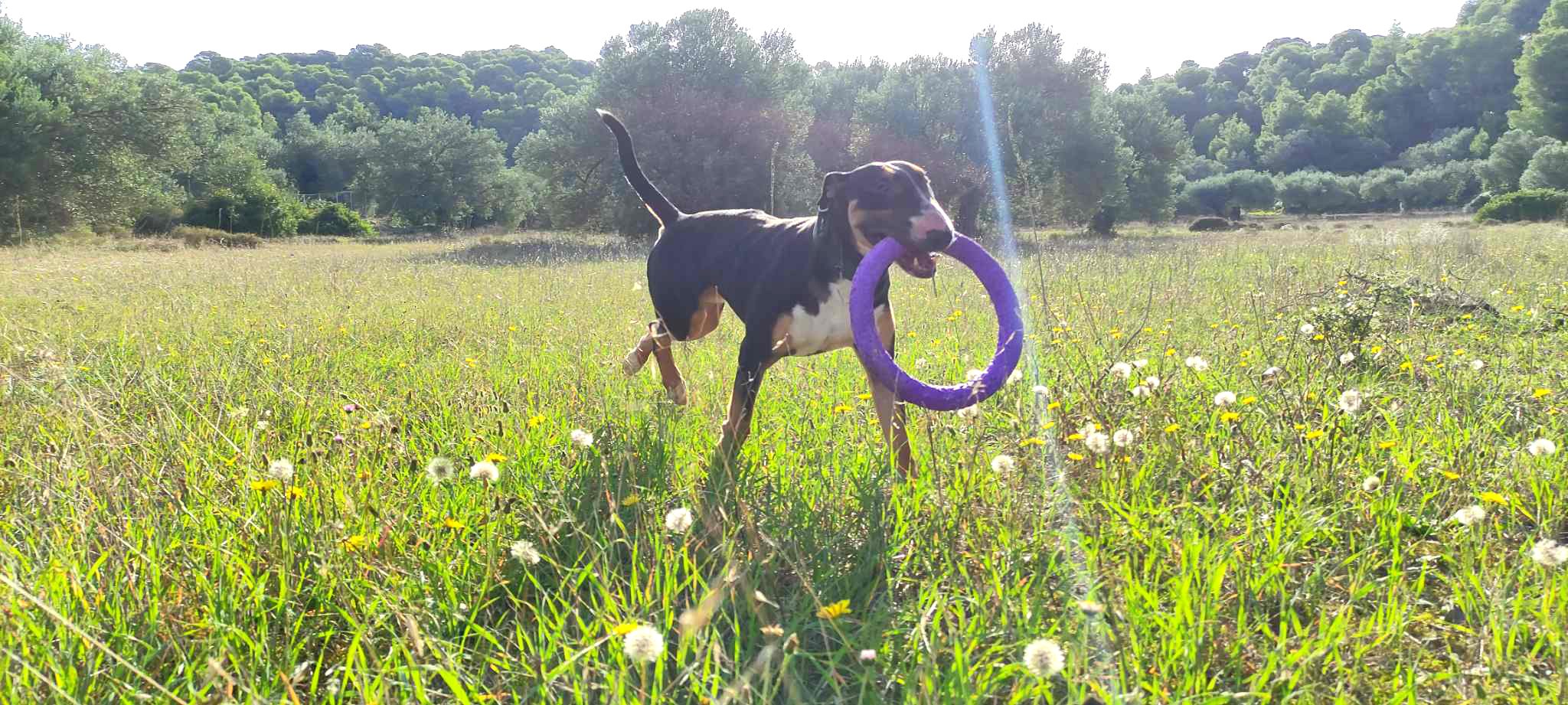
Thank you all for your comments on our question: ”Let us suppose you are trying to teach your dog a new command ,obstacle or trick. After how many failed attempts do you decide that you can’t teach this to your dog ? Or that the dog is not capable of learning it ? 50 ,100 ,200 times ? When do you quit ? ”We have read all your answers and agree , quitting is not a solution.
When teaching a new command, quitting is not a solution. A small break is. When a dog is not in a position for any reason to learn something new, there is no point in insisting. A new approach may be required or the dog is simply not ready to learn what you are trying to teach.
Taking some time off the task, gives you time to think of a new approach. When starting training the command again ,with a new approach, the dog will start learning. No reason to try different methods.
When you try one thing and does not work, then another that does not work and keep doing this until you find some thing that works, chances are, you will end up with a bored dog that does not like training sessions. Nobody wants to fail all the time. Therefore, when something does not work, then you stop training the specific command for a little while. Work on commands the dog already knows or are easier to learn, to keep the dog’s confidence and mood high. Then return to the command you took some time of with a new approach.

Most of the time, after a small pause, it is possible to achieve your training goal with the same approach that did not previously work. Simply because the dog had the time to process new information. Dogs, just like humans, need time to process new information.
When it comes to training obstacles, the same rule applies. Only in this case, a certain group of muscles may require strengthening before the dog can perform. The dog’s confidence may also need work. It is possible that the dog is strong enough to perform but is not confident enough. A generally good physical condition is one thing. The small supportive muscle groups that need to work for specific obstacles is another. Along with the dog’s overall physical condition, you need to make sure those smaller muscle groups are adequately trained too. Examine the dog’s overall condition and decide how to act accordingly.
Read next :
Leave a Reply