







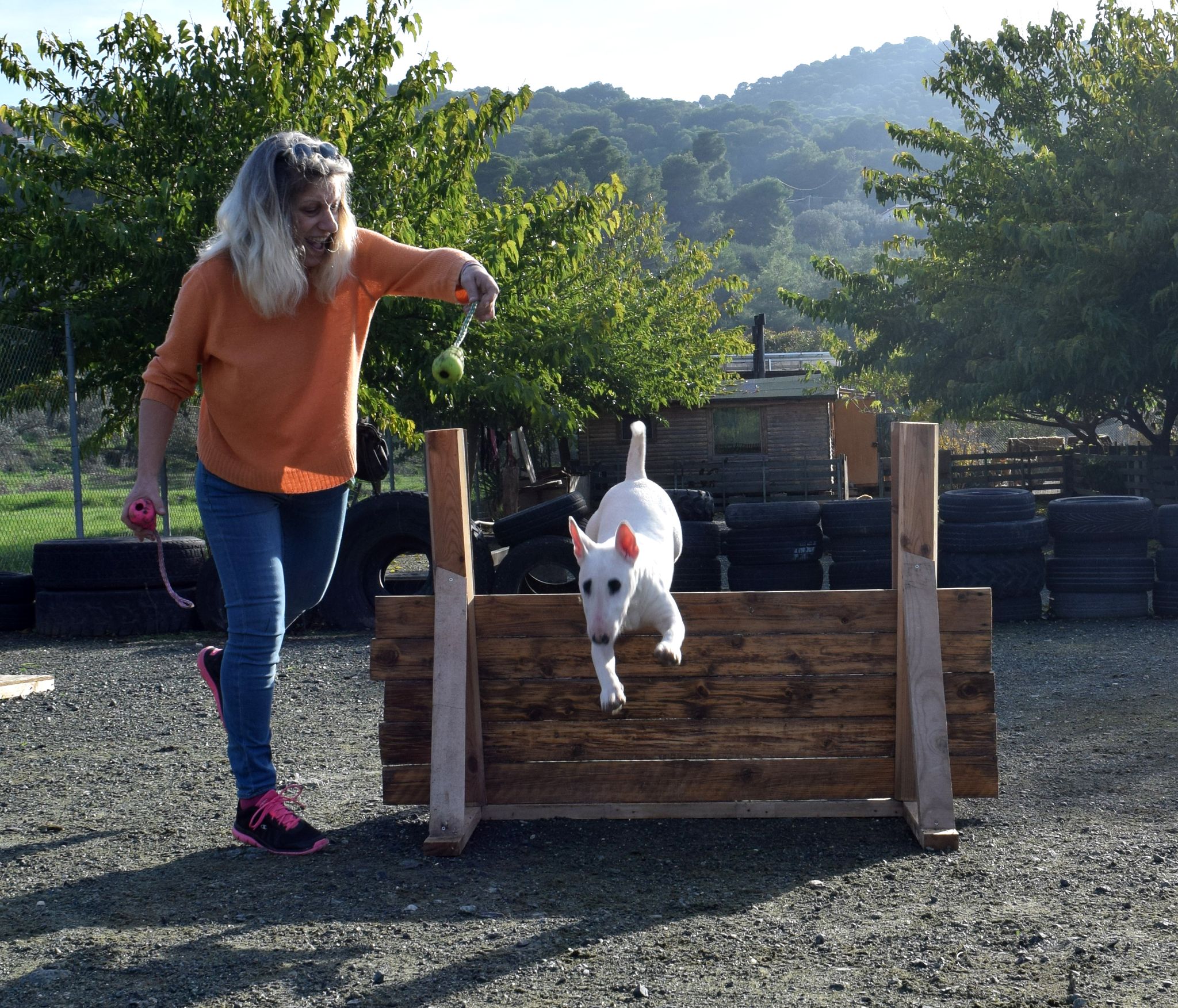
Well, yesterday. If you haven’t already started, start today.
One of the most common questions we get is “When is the right time to start training my dog?”
Some wonder if the dog is too young to start training. Others, whether the dog is too old to learn. Many wonder if training is going to distort the dog’s character or if an older dog can change his habits.
To begin with I want to make clear that correct training will bring out a dog’s character and provide a common communication code between dog and dog owner.
Training should have started before you even take your dog home, by the breeder. The breeder is responsible to have the puppy crate trained, potty trained, to teach the puppy to bite on toys instead of hands and many more things. I know this is a part most breeders try to avoid, saying training should start later before the dog is too young to understand and so on. And I know most breeders will avoid attending to training their puppies but this is a different subject to be addressed in an other article.
Back to our subject, training starts the first day you take your puppy home. On that first day rules are set, rules agreed upon and followed by all family members. It is important to pay attention to what behaviours are awarded/encouraged. While the dog is a sweet funny puppy some behaviours may not seem disturbing or annoying but 5-6 months later they may prove to be unacceptable. Jumping on people to greet them, biting hands and feet and getting on the couch are some examples of such behaviour.

This is very important because it is a lot easier to not allow a behaviour to appear than having to modify a behaviour you have encouraged. A most commonly expressed complain people have about their dogs is that the dog jumps on people he knows or even strangers, to greet them. More often than not, this behaviour was acceptable until the puppy was 4-5 months old. Until then the puppy would see his family, jump on them , they would laugh and pet him this way encouraging the behaviour.
When the puppy is 6-7 months old, family suddenly decides they do not like the behaviour they until recently encouraged. We stop accepting a behaviour we have encouraged for months. That does not make sense at all. And no matter how you see it, it is not the dog’s fault, no dear dog owners, it is our fault.
The examples I could give are endless. I am sure many of you reading this article have already thought of mistakes you have done to this day. The simple thing to do , is teach the dog to sit when he sees us and pet him while he is seated, not when he jumps on us. This can be done by having 3-4 two minute sessions daily to teach the “sit” command. Next time the dog comes to greet us jumping we ask him to sit and reward him for doing so.
We introduce the leash in a very young age, even if the puppy has not completed his vaccination and is not ready to go outside for a walk. We do not wait for the vaccination to be completed and THEN put on the leash , go outside and expect the puppy will just follow because we so decided.
We have properly socialized the puppy outdoors beforehand, without putting his health into risk , we have taught the puppy to walk on the leash inside the house and then we take the dog out.
This way, the puppy’s first short walk outside on the leash will be a pleasant and relaxed process. Given that the dog has learned the “sit” , we ask him to sit before we serve his food or before we put the leash on or before we walk out the door. At this age, we keep our expectations low. If the puppy sits for two seconds, we are satisfied. At this age we are not looking to complete the dog’s training. We are setting the foundations for a smooth cohabitation and teaching our puppy that training is something pleasant and easy-going.
Do not try to teach your puppy tricks like giving the paw and such with minor if any at all usefulness. It is a waste of time. I mention this because I see many new dog owners spending their time trying to teach their jumping-biting- puppy tricks, expecting the biting and jumping will just go away with time – which will not happen. Do not waste your time on commands that are not directly useful.
Therefore, the sooner training begins, the better. We put our puppies on the right track from a young age. Training has to be tailored to the dog’s age and needs. The younger the puppy the simpler and briefer the training must be. Young and older dogs without training experience can commence training too. Yes, some dogs may need a little more time to adapt but they will. If introduced to training in the correct way, they will soon start enjoying the process. Yes, dogs of older age can be trained and change habits. It will take a little longer for them to change behaviours of months or even years , but with proper guidance, they will change.
We have seen amazing results even in dogs that were adopted late in their life and started training in quite an old age.
What matters the most is to follow the correct training method , customized to your dog’s specific needs.

Leave a Reply